
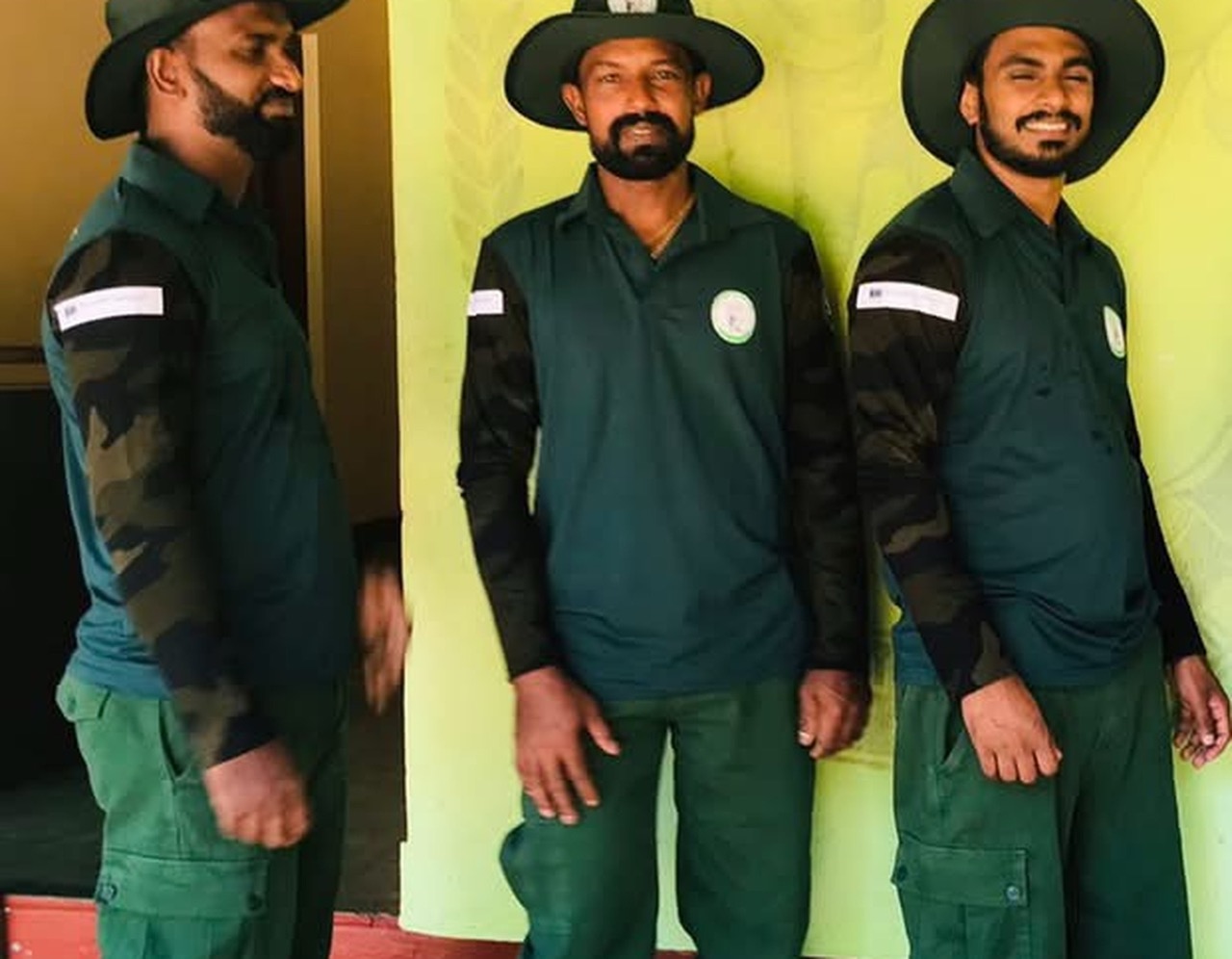
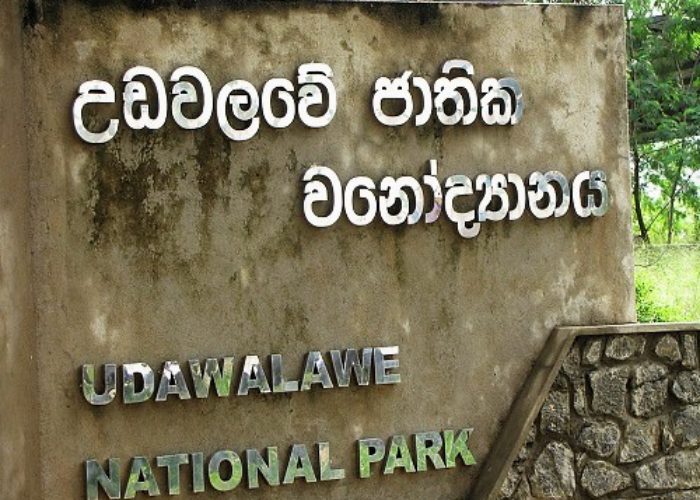
Six in the morning at the Udawalawe entrance. Your jeep is idling in the queue, the light is only just coming up over the treeline, and somewhere between joining the line and rolling through the gate a stranger climbs aboard. Nobody explains who he is. He might talk the whole drive, or he might say almost nothing. At the end, everyone in the vehicle exchanges an awkward look, because nobody is sure whether they are supposed to pay him.
That stranger is a tracker — a park official attached to Sri Lanka's Department of Wildlife Conservation (DWC). This guide explains exactly who they are, what they are actually for, whether you need one, what travellers genuinely think of them (the good and the bad), and the question everyone types into Google at the end of the drive: how much do I tip?
We run safaris at Udawalawe for a living, so we have an obvious interest here. We have tried to be straight with you anyway — including about where we think the tracker system falls short, and where our own service does and does not include them.
⚡ The short answer
- A tracker is a DWC park official, not your safari driver and not an employee of your tour operator.
- They are not compulsory at Udawalawe and are provided free of charge, subject to availability — on a busy morning you may not get one at all.
- Their job is spotting wildlife, keeping the jeep on legal routes, enforcing park rules, and carrying the DWC radio that links you back to the park office.
- Quality is genuinely inconsistent. The best are superb. Some have limited English and limited experience.
- Yes, you should tip. LKR 1,000–1,500 for a half-day drive is the customary range. Cash, in rupees, at the end.
Skip the guesswork. Our drivers know these herds daily — private jeep, hotel pickup and park tickets included, from $50.
Book a Safari →🛡️ Who Are the DWC Trackers?
The Department of Wildlife Conservation is the non-ministerial government department responsible for Sri Lanka's national parks, nature reserves and wilderness areas. It operates under the Fauna and Flora Protection Ordinance No. 2 of 1937, one of the oldest pieces of conservation legislation in Asia, and employs roughly 1,800 staff across the island.
Trackers — you will also hear them called park guides, wildlife guides or, loosely, rangers — are the front line of that department where it meets tourism. They are stationed at the park entrance and allocated to incoming safari vehicles. They are not freelancers touting for work, and they are not attached to any particular safari company. They belong to the park.
That distinction matters more than it sounds, and we will come back to it, because most of the confusion travellers have about trackers comes from mixing up three completely different people.
🔍 What a Tracker Actually Does
Strip away the folklore and the role comes down to four functions.
1. Spotting and identifying wildlife
This is the part visitors notice. A good tracker has been in the same few hundred square kilometres for years. They know which waterhole the herds favoured last week, where a particular tusker has been feeding, and how to read the alarm calls that mean a leopard is moving. They also see things you physically cannot: a sloth bear at the treeline reads as a dark smudge to an untrained eye.
2. Keeping the vehicle legal
Safari operations must stay on tracks demarcated by the DWC, respecting one-way routes and no-parking zones. A tracker on board is a real-time check on the driver. Given that speeding and off-track driving are the two biggest complaints about Sri Lankan safari tourism, that is not a trivial function.
3. Carrying the radio
Official guidelines for registered safari operations specify communication by walkie-talkie provided by the Department of Wildlife Conservation, maintaining contact between the vehicle and the wildlife department office — and state plainly that no mobile phones are permitted during the tour. Mobile coverage inside the park is patchy at best. If a vehicle breaks down, someone is injured, or an elephant blocks the only track out, the radio is the link back to the park office.
4. Enforcing behaviour around animals
Distance from animals, engine noise, standing up at the wrong moment, getting between a mother and a calf — a tracker's job includes telling your driver, and you, to stop. The best ones do it politely and early. Udawalawe's elephants are wild animals, and a startled or harassed elephant is dangerous to everybody, tourists included.
🧭 Tracker vs Driver vs Naturalist: Clearing Up the Confusion
Almost every argument online about whether you "need a guide" at Udawalawe is really an argument between people talking about three different roles. Here they are, separated.
The DWC Tracker
A Department of Wildlife Conservation official assigned at the gate. Free, subject to availability. Spots wildlife, enforces rules, carries the park radio. English varies. Customarily tipped.
The Safari Driver
Employed by the company you booked with. Drives the jeep, and with a good operator is also a trained naturalist doing the interpretation. Must hold a valid licence and, under tourism guidelines, an identity card issued by the SLTDA in collaboration with the DWC.
The Private Naturalist
An optional specialist you pay for — a birding expert or wildlife photographer's guide. Rare on a standard Udawalawe drive, common on dedicated wildlife tours. Not provided by the park.
Official Sri Lankan tourism guidelines treat the driver and tracker as separate roles explicitly. One clause requires that "safari drivers shall maintain professional and friendly relations with the passengers and the tracker." Another states as a mandatory requirement that "all safari drivers & tracker shall be trained to act in case of all emergencies by certified authorities."
❓ Are Trackers Compulsory at Udawalawe?
No. And this is where a lot of published information is simply wrong, including on sites that ought to know better.
You cannot enter Udawalawe in your own car — a licensed safari jeep and driver are required. But the DWC tracker is a separate matter. The department provides a wildlife tracker for each jeep free of charge, subject to availability. That last phrase is doing a lot of work.
Availability is the real constraint. A DWC action plan identified an "insufficient number of trained wildlife guides to ensure one guide per vehicle" as a critical limitation on park operations. When several hundred jeeps queue at the gate for a 6am opening, the arithmetic does not work. Many vehicles go in without one.
So if no tracker joined your jeep, nothing went wrong and nobody cheated you. There was nobody free.
🐘 No Tracker at the Gate? It Doesn't Have to Matter
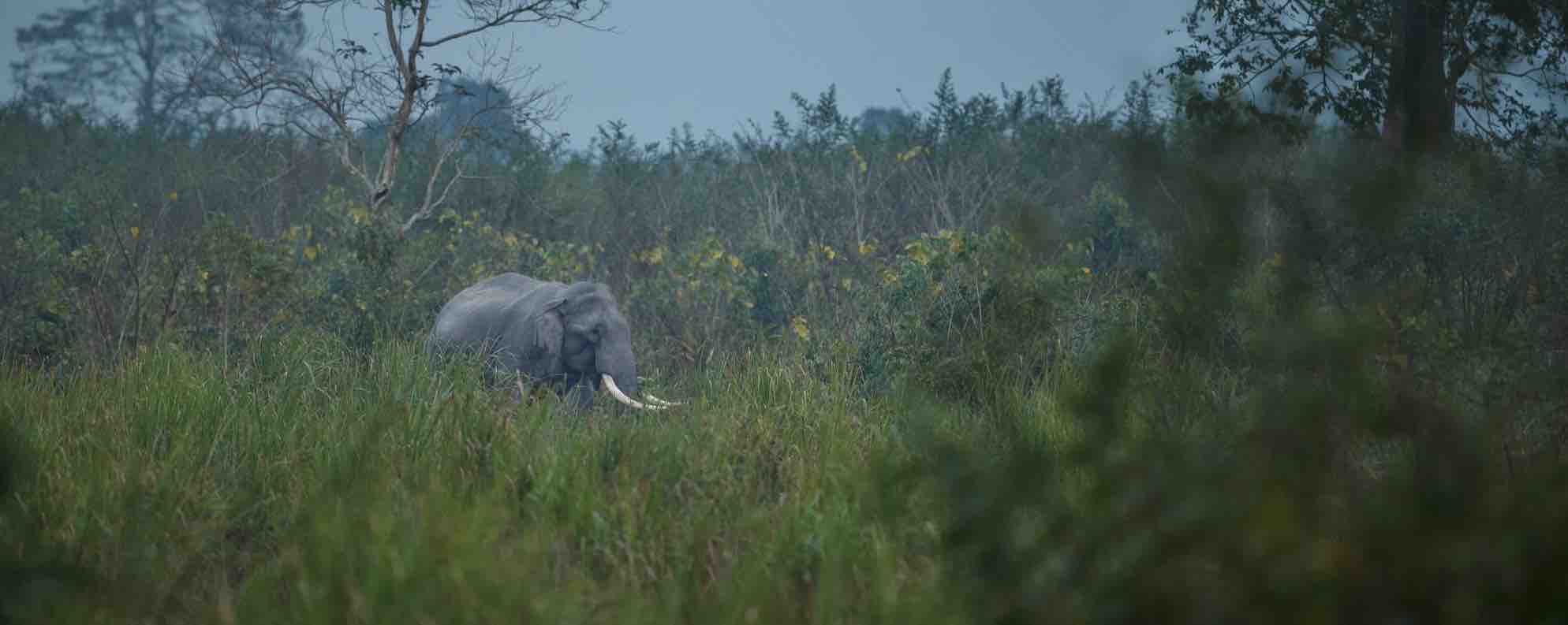
Our guests routinely have a full morning of elephants without one, because the person driving already knows where the herds have been moving this week. Private 4WD jeep, hotel pickup from anywhere in Sri Lanka, and park tickets for every passenger in one fixed price.
Check Availability from $50 →⚖️ The Honest Verdict: Good and Bad
We have carried a lot of trackers in our jeeps over the years, and read a great many traveller accounts. Here is the fair summary.
👍 What travellers praise
- Genuine spotting skill. Visitors regularly credit trackers with finding a leopard resting in shade, sloth bears crossing at the forest edge, and bird species the rest of the vehicle would have driven straight past.
- Deep local familiarity. The best know resident elephant family groups individually and can tell you about their behaviour and history.
- They cost nothing up front. No booking, no fee, no negotiation at the gate.
- A real safety function. The DWC radio and the emergency training requirement are not decoration.
- A brake on bad driving. An official in the vehicle makes it harder for a driver to speed or chase animals.
👎 What travellers complain about
- English is a lottery. This is far and away the most common criticism. Some narrate fluently; some can only point.
- Experience varies widely. One widely-read travel blog described park trackers as having "limited English and minimal guiding experience", noting their enthusiasm but concluding they were "simply not as savvy at spotting wildlife as the more experienced guides."
- You may be the one doing the guiding. The same account reported that their own private guide "was the one who spotted all the incredible wildlife we saw whilst the park's tracker guides took their lead from him."
- No guarantee you get one. Staffing shortfalls mean it is luck of the draw.
- They take a seat. In a full jeep of six, that is a real cost.
- Tipping ambiguity. Nobody tells you the norm, which leaves visitors either underpaying or feeling pressured.
"Park trackers were volunteers with limited English and minimal guiding experience… their enthusiasm was appreciated, but they were simply not as savvy at spotting wildlife as the more experienced guides."
— Nomadic Boys, independent travel blog, on their Sri Lanka safari experienceWe include that quote deliberately, because it is the most useful criticism we found and it is not flattering to the system. It is one traveller's experience rather than a survey, and it describes trackers as volunteers — our understanding is that they are attached to the department rather than unpaid volunteers — but the underlying observation about inconsistency matches what we see.
🎯 Our opinion, for what it is worth
The tracker system is a good idea that is under-resourced, and you should treat a tracker as a bonus rather than a plan.
When you get a good one, they add something no outsider can replicate: years of watching the same animals in the same landscape. We have had drives transformed by a tracker who knew exactly which bend a herd had been crossing at dawn all week.
But the department is trying to cover hundreds of vehicles a day with a workforce that its own planning documents admit is too small. That produces exactly what you would expect — brilliant on a good day, underwhelming on a bad one. It is not the individuals' fault, and it is not a scam. It is a staffing problem.
So: accept a tracker gladly, do not be disappointed if you are not offered one, and never let the presence or absence of a tracker be the thing your safari depends on. That job belongs to whoever is driving your jeep.
💵 Tipping Your Tracker: What to Give and When
Let us be direct about this, because it is the question you came for and most sites dodge it.
If a DWC tracker rides with you and does their job, you should tip them. Their service carries no charge at the gate. Tipping is not legally required in Sri Lanka, but it has become firmly customary across tourism and is genuinely expected in safari settings. Someone who has spent four hours standing in the back of your jeep in the heat, finding you elephants, deserves to be paid for it.
| Situation | Suggested tip (LKR) | Notes |
|---|---|---|
| Half-day drive (3–4 hrs), standard service | 1,000 – 1,500 | The widely quoted customary range. Per jeep, not per person. |
| Full day, or two drives | 2,000 – 3,000 | Longer hours, more effort |
| Exceptional — found something rare, great commentary | 3,000+ | Reward it. Word travels among the gate staff |
| Quiet drive, but they clearly tried | 1,000 | Judge effort, not luck — nobody controls the animals |
| Disengaged, or pushed you to break park rules | Reduced or none | Entirely reasonable, and worth reporting at the office |
How to tip properly
- Cash, in Sri Lankan rupees. Foreign notes are hard for a park employee to change and small foreign coins are worthless.
- Bring it with you. There is no reliable ATM at the gate. Carry a few LKR 500 and 1,000 notes specifically for tips.
- Hand it over directly, at the end. Not through your driver, not at the start.
- Tip the driver separately. They are different people doing different jobs and one tip does not cover both.
🐘 Book an Udawalawe Safari with a Driver Who Knows the Park
Private 4WD jeep, hotel pickup, park tickets for every passenger, and an experienced English-speaking driver-guide who tracks these herds every day. Fixed price, no surprises at the gate.
Book Your Safari from $50 →🚙 Where Udawalawa.com Stands on Trackers
Since we sell safaris, you deserve a clear statement of our position rather than a sales pitch dressed as advice.
Our drivers are experienced, safety-focused and speak English. They are not simply drivers. They know Udawalawe's resident elephant groups, they know which routes are producing sightings in the current season, and they know how to position a vehicle for a photograph without harassing the animal. They have been doing this for years, and safety around wild elephants is the first thing we train for.
Because of that, our guests do not really need a DWC tracker to have an excellent safari. The great majority of our drives run without one and our guests see plenty — Udawalawe's open grassland and very high elephant density make it a far more forgiving park than Yala for a vehicle without an extra spotter.
That said, we are perfectly happy for you to have one. If a tracker is available at the gate and you would like them along, our jeeps will gladly offer them a seat. We work alongside park staff every day and have no interest in keeping them out of our vehicles.
🤝 How to Get the Best Out of a Tracker
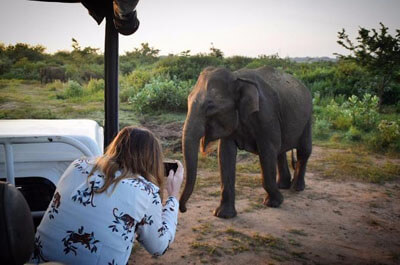
If one does join you, a little effort on your side changes the experience considerably.
- Say hello and learn their name. Obvious, routinely skipped, and it changes the whole drive.
- Tell them what you want to see. Birders, photographers and families want completely different drives. They cannot guess.
- Ask questions. Even with limited English, a direct question about an animal in front of you usually gets an answer.
- Be patient at sightings. Trackers know that sitting quietly with a herd for fifteen minutes beats racing to the next thing. Back them up when they suggest waiting.
- Do not push for the rules to be bent. Asking a tracker to get closer to an elephant puts them in an impossible position and puts you in a dangerous one.
- Have the tip ready in your pocket so the end of the drive is not an awkward scramble.
🌍 The Wider Picture
It is worth understanding the pressure the system is under, because it explains a lot of what visitors experience.
Sri Lanka's parks are extremely popular. Yala alone drew roughly 390,000 visitors in the first half of 2025, with around 500 jeeps permitted to operate and government plans to cut that to 250–300. Conservation groups have called for "immediate and consistent enforcement of park regulations firmly, fairly and without exception" and for strengthened driver accountability. In January 2024 the DWC launched a licensing programme for safari jeep drivers.
Against that backdrop, the tracker riding in your jeep is one of the few points where the department has direct eyes on what vehicles are actually doing inside the park. That is a good argument for welcoming them aboard even if their English is limited — and a good argument for the department being funded to employ more of them.
❓ Frequently Asked Questions
A tracker is a park official attached to the Department of Wildlife Conservation, the government body that manages Sri Lanka's national parks under the Fauna and Flora Protection Ordinance of 1937. At Udawalawe a tracker may be assigned to your jeep at the entrance gate to ride along with you, help spot wildlife, keep the vehicle to permitted routes and make sure park rules are followed.
No. Unlike some parks where a guide is mandatory, a tracker at Udawalawe is offered rather than imposed. The Department of Wildlife Conservation provides a tracker for each jeep free of charge subject to availability, which means on a busy morning there may simply not be one free for your vehicle.
There is no separate fee charged for the tracker themselves. The Department of Wildlife Conservation assigns them free of charge, and the service charge component built into the gate ticket covers park staffing. What is customary, and what we strongly recommend, is a cash tip at the end of your drive.
For a standard three to four hour morning or evening drive, LKR 1,000 to 1,500 for the tracker is the widely quoted range and is genuinely appreciated. For a full day or an exceptional performance, LKR 2,000 to 3,000 is appropriate. Tip in Sri Lankan rupees in cash, handed over directly at the end of the drive.
No. They are two different roles. Your driver works for the safari operator you booked with, drives the jeep and on a good operator also does the wildlife interpretation. The tracker is a park official who joins at the gate. Sri Lanka Tourism Development Authority guidelines treat them separately, and require that safari drivers maintain professional and friendly relations with the tracker.
It varies enormously and this is the single most common complaint. Some trackers speak confident, fluent English and narrate the whole drive. Others have limited English and will mainly point. If detailed commentary matters to you, rely on an experienced English-speaking driver-guide and treat the tracker's spotting as a bonus.
The best are outstanding. Travellers regularly credit trackers with finding leopards resting in shade, sloth bears at the forest edge and birds that nobody else in the vehicle would have noticed. But quality is genuinely inconsistent. Some travellers report that their own experienced guide did the spotting while the park tracker followed their lead.
Because there are not enough of them. A Department of Wildlife Conservation action plan identified an insufficient number of trained wildlife guides to ensure one guide per vehicle as a critical constraint, and hundreds of jeeps can enter a popular park in a single morning. Trackers are allocated on availability, so at the 6am rush you may go in without one.
Honestly, no. Our drivers are experienced, safety-focused English-speaking naturalists who know the park's resident elephant herds and the routes that produce sightings. Most of our guests have an excellent safari without a tracker on board. If you would like one, we are happy to carry them in the jeep — we simply do not include any tracker fee or tip in our package price, so that is yours to give directly.
No. Our all-inclusive price covers hotel pickup and drop-off, the private jeep, park entrance tickets for every passenger, your driver-guide and all service charges. It does not include any payment to a Department of Wildlife Conservation tracker. If a tracker rides with you and you are happy with them, please tip them directly in cash.
Four things. They spot and identify wildlife using local knowledge of where animals have been moving. They keep the vehicle on permitted tracks and away from no-parking zones. They carry a Department of Wildlife Conservation radio, which is the link back to the park office if something goes wrong. And they enforce park rules on distance, noise and behaviour around animals.
Still deciding who to book with? Fixed price, private jeep, tickets included — and a driver who does this every morning.
Book Now →Not reliably. Trackers are allocated by the park office in turn rather than chosen by visitors, so requesting a particular individual is not usually possible. You can politely mention a preference for an English speaker at the ticket counter, but there is no guarantee.
Usually in the front passenger seat beside the driver, or standing on the rear step of the vehicle where the view is best. This does take up one seat, which matters if you are a full group of six in a six-seat jeep — worth planning for when you book.
No. The tracker riding in your jeep is a wildlife guide, not an armed enforcement ranger. The Department of Wildlife Conservation also employs enforcement and anti-poaching staff, but that is a different function from the tracker who accompanies visitors on a game drive.
A tracker cannot make elephants appear on demand, so judge them on effort rather than luck. If they worked hard, communicated as best they could and behaved responsibly around animals, tip them even if sightings were quiet. If they were disengaged or pushed you to break rules, a smaller tip or none is entirely reasonable.
Tipping is not legally required and is not built into wages the way it is in some countries, but in Sri Lankan tourism it has become customary and is genuinely expected in safari settings. Not tipping a tracker who has ridden with you for four hours would be noticed. Our view is simple: if they helped you, pay them.
Sri Lankan rupees, in cash. Foreign notes are awkward for a park employee to change and small denominations of foreign currency are often worth less than they appear. Carry a few LKR 500 and LKR 1,000 notes specifically for tips before you reach the park, as there is no reliable ATM at the gate.
Yes, the Department of Wildlife Conservation operates the same tracker system across Sri Lanka's national parks including Yala, Wilpattu, Minneriya and Bundala. Yala is busier and its tracker allocation is under more pressure, with the park receiving around 390,000 visitors in the first half of 2025 alone.
You cannot drive your own vehicle around the park, so you will always have a licensed safari jeep and driver. What is optional is the additional Department of Wildlife Conservation tracker. Plenty of visitors have an excellent drive with just a good driver-guide.
They are supposed to be. Sri Lanka Tourism Development Authority guidelines for safari operations state as a mandatory requirement that all safari drivers and trackers shall be trained to act in case of all emergencies by certified authorities, and that an emergency first aid box shall be available in the vehicle.
Official safari operation guidelines specify that communication should run through walkie-talkies provided by the Department of Wildlife Conservation to keep contact between the vehicle and the wildlife department office, and state that no mobile phones are permitted during the tour. In practice this is about keeping the radio channel as the safety link and reducing disturbance.
Book a good operator and go at first light. The quality of the person interpreting the park for you matters more than almost anything else, and animal activity at Udawalawe is concentrated in the early morning and late afternoon. A tracker is a bonus on top of that, not a substitute for it.
🚙 Ready to See Udawalawe's Elephants?
Private jeep, hotel pickup from anywhere in Sri Lanka, tickets for every passenger and a driver who has been reading this park for years. Tracker welcome aboard if one is available — tip at your discretion.
Book Your Udawalawe Safari →📚 Sources
This article draws on official and independent sources rather than
operator marketing:
• Department of Wildlife Conservation, Sri Lanka — departmental remit and the Fauna and Flora Protection Ordinance No. 2 of 1937.
• Sri Lanka Tourism Development Authority — Guideline for Vehicle Safari Tour Operations — mandatory emergency training for drivers and trackers, DWC walkie-talkie communication, driver conduct and vehicle requirements.
• Mongabay — DWC action plan on insufficient wildlife guides, visitor and jeep numbers, driver licensing and enforcement.
• Department of Wildlife Conservation (Sri Lanka) — departmental size and budget.
• Nomadic Boys — independent first-hand traveller account, quoted above.
• Tipping ranges reflect published Sri Lanka tipping guidance from multiple independent travel sources, cross-checked for consistency.
Udawalawa.com is a private safari operator and is not affiliated with the Department of Wildlife Conservation. Park fees, staffing practice and tipping norms change — please treat figures as guidance and confirm current details at the park. Last reviewed August 2026.