Mirissa has something no other base on this coast can offer. Between November and April its harbour is the best blue whale departure point in Sri Lanka, and the park with the island's most reliable elephants is 106 km inland — under two hours away. Those two facts fit together better than almost anyone realises, and most of this page is about the timing that makes it work.
On distance alone Mirissa sits comfortably mid-pack: nearer the park than Galle at 132 km, further than Ella at 91 km, and a world away from Colombo at 245 km. Close enough that the morning safari has you back on the sand for lunch.
🐋 Whales and elephants in one day?
Tell us your dates and whether you are booking a whale boat. We will time the safari around it and send back one fixed, all-inclusive price.
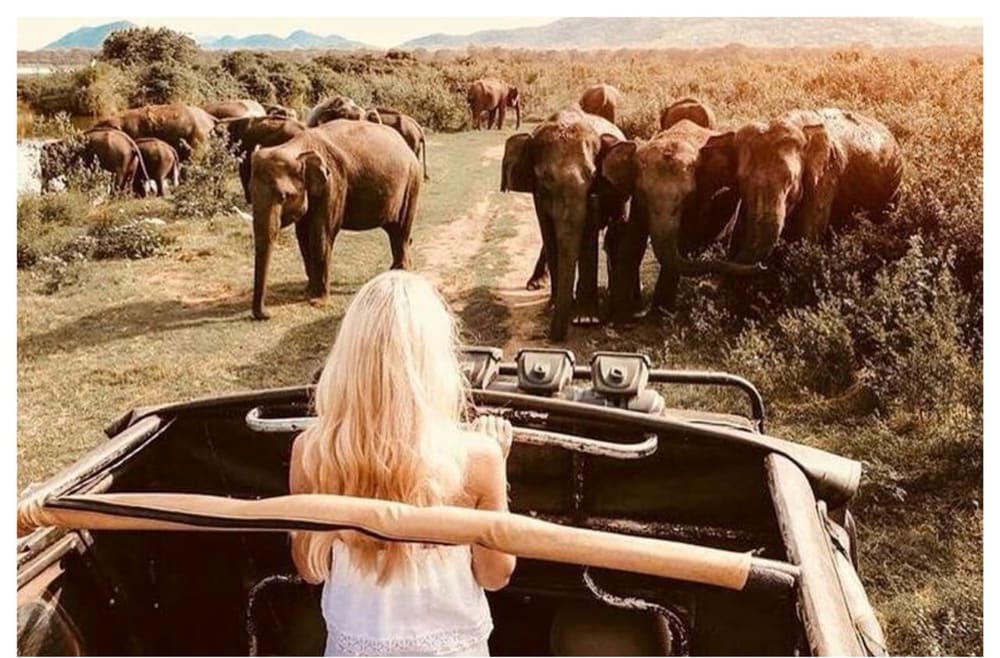
Whales in the morning, elephants in the afternoon
This is the itinerary worth building your week around, and the reason is a scheduling clash most people discover too late. Whale boats leave Mirissa harbour between about 6:00 and 6:30 AM. The Udawalawe gate also opens at 6:00 AM, which from here means a 3:40 AM pickup. You cannot do both in the same morning.
But the boats are back by late morning — and the park runs a second game drive in the afternoon. So the day assembles like this:
| Time | What happens |
|---|---|
| ~6:00 AM | Whale boat leaves Mirissa harbour |
| ~11:00 AM | Back on dry land; shower, eat, sit down for a bit |
| 12:45 PM | We collect you from your hotel |
| ~2:40 PM | Arrive Udawalawe, tickets already arranged |
| 3:00–6:00 PM | Private jeep safari — golden light, elephants coming down to water |
| ~8:00 PM | Back at your hotel, in time for dinner in Mirissa |
Be honest with yourself about the length of it. That is a fourteen-hour day that starts at sea and ends on a dirt track. It is genuinely one of the best days you can have in Sri Lanka, and it is also a lot. If you have two days to spare, do the whales one morning and the morning safari the next — you will see more elephants, because they are far more active at six than at three.
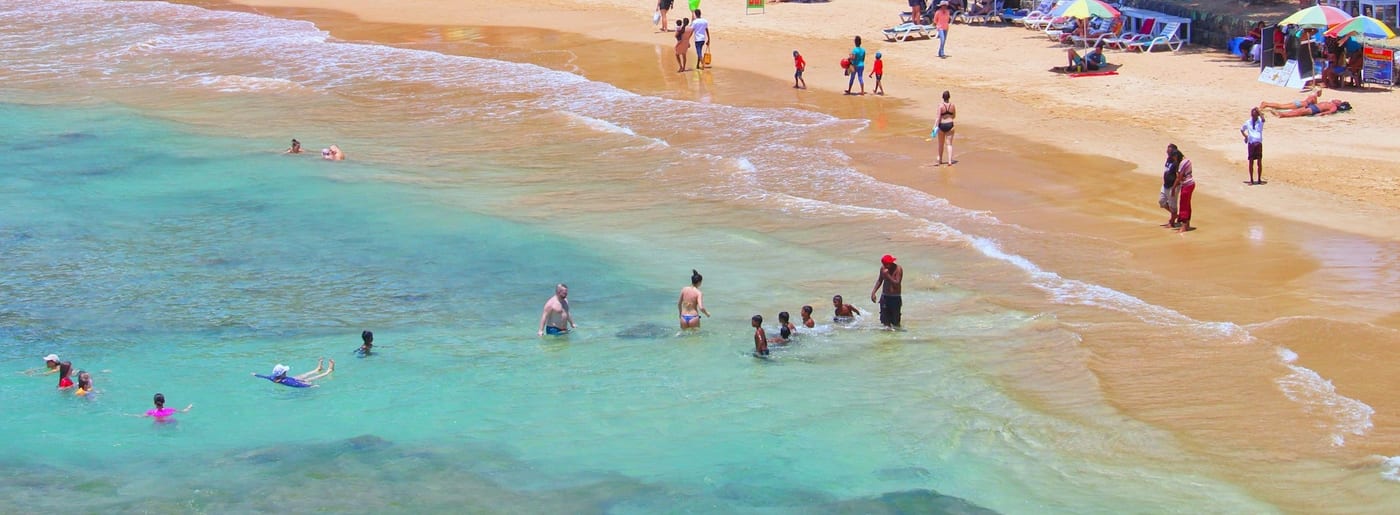
When is whale season?
November to April, with the calmest seas and best sightings from January through April. Operators report sighting rates of 80–90% in peak season. Outside those months the boats mostly stop running, because the south-west monsoon makes the sea too rough for small craft.
Udawalawe, by contrast, never closes. It is open every day of the year, and the dry months from May to September actually concentrate animals around the reservoir — which is precisely when the whale boats are not sailing. So the two halves of Mirissa's wildlife offer cover opposite ends of the calendar, and there is no month when the safari is a bad idea.
The drive, and the numbers behind it
We measured the route from the beach road to the park ticket office:
| From | To the park | Driving time |
|---|---|---|
| Matara | 101 km | 1 hr 39 min |
| Mirissa | 106 km | 1 hr 52 min |
| Weligama | 111 km | 1 hr 46 min |
The route runs east along the coast and then inland on good tarred road. There is also an inland alternative that is slightly shorter at 98 km, but it takes 2 hours 40 minutes on narrow lanes, so nobody sensible uses it for a 6:00 AM gate. Our drivers take the fast way.
How Mirissa compares with the other bases
| Base | Distance | Driving time |
|---|---|---|
| Shangri-La Hambantota | 52 km | 1 hr 5 min |
| Tangalle | 70 km | 1 hr 19 min |
| Ella | 91 km | 1 hr 56 min |
| Mirissa | 106 km | 1 hr 52 min |
| Galle | 132 km | 2 hr 3 min |
| Bentota | 186 km | 2 hr 42 min |
| Colombo | 245 km | 3 hr 39 min |
All measured door to door to the main park entrance in October 2026. Mirissa is quicker than Ella despite being further, because the coast road is faster than the hill descent.
🐘 Morning drive, back for lunch
The simplest version: collected at 3:40 AM, at the gate for six, back on the beach by quarter to twelve. Send your dates for a fixed price.
What Udawalawe actually is — and what it is not
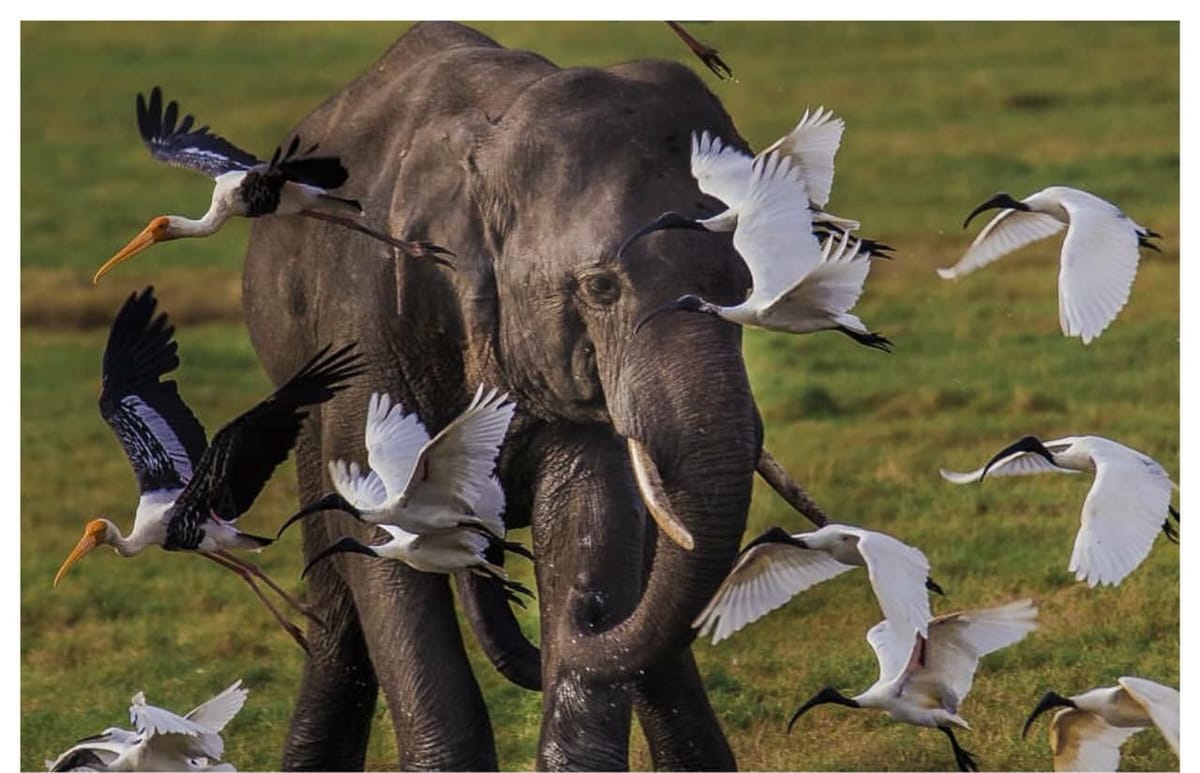
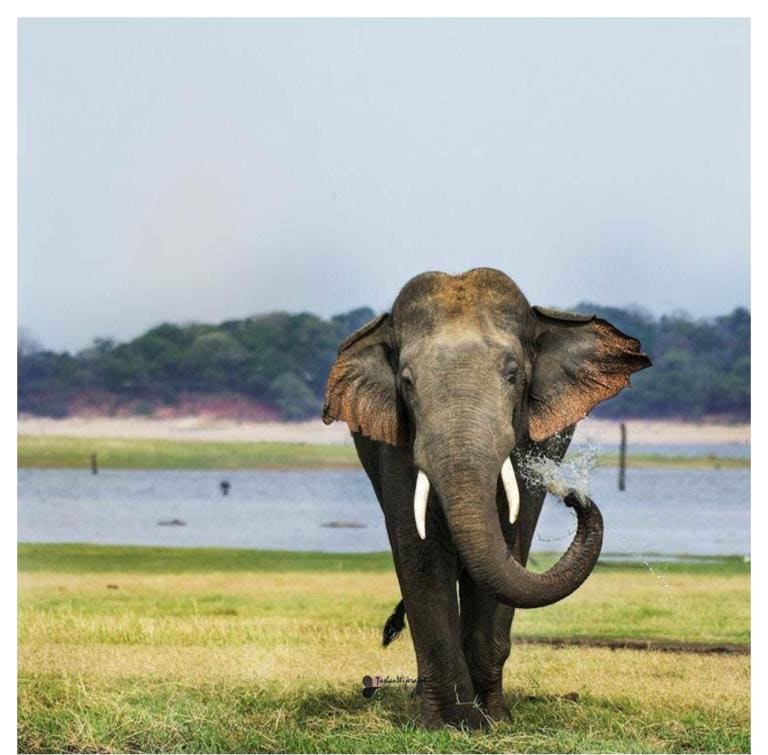
Udawalawe National Park was established on 30 June 1972 to shelter wildlife displaced by the building of the Udawalawe Reservoir on the Walawe River. It covers 30,821 hectares — about 308 km² of open grassland, scrub and water. That openness is the whole point: you are not hunting for animals hidden in jungle, you are scanning a landscape where they are plainly visible. Alongside the elephants it records 43 mammal species and 184 birds, 33 of them migratory, plus 33 reptiles and 135 species of butterfly.
It is not a leopard park. Leopards exist there in very small numbers, but sightings are far too rare to build a trip around. Yala is the leopard park — and from Mirissa that is 137 km and about 2 hours 29 minutes, roughly half an hour further than Udawalawe. If elephants are what you came for, Udawalawe is both the closer option and by some distance the more reliable one. See Udawalawe vs Yala for the full comparison.
Where we collect you
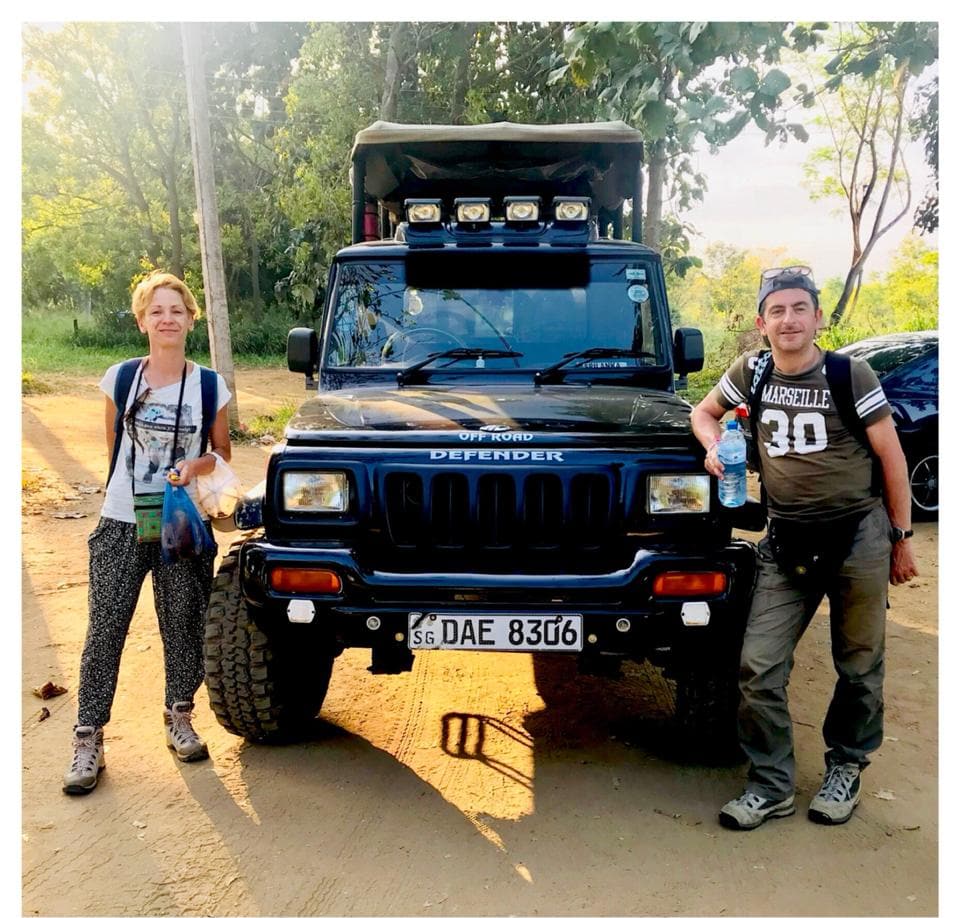
Anywhere along this stretch, at no extra cost — Mirissa itself, Weligama, Midigama, Ahangama, Kamburugamuwa or Matara. The whole coast here is about 15 km end to end, so the pickup time barely moves wherever you are staying, whether that is a surf camp, a guesthouse on the hill or one of the bigger beachfront hotels.
Two practical notes for a 3:40 AM start. Most Mirissa guesthouses will leave out a breakfast box if you ask the night before — at that hour nothing is open. And if you are on an unlit lane behind the beach, send us a pin when you book; it saves ten minutes of hunting in the dark.
Your day, hour by hour
The morning version, which is what most guests book:
| Time | What happens |
|---|---|
| 3:40 AM | Pickup from your hotel in an air-conditioned vehicle |
| 5:40 AM | Arrive at the Udawalawe ticket office; tickets already arranged |
| 6:00–9:30 AM | Private jeep safari — the coolest, most active hours of the day |
| 9:45 AM | Breakfast and a proper break |
| ~11:45 AM | Back at your Mirissa hotel, whole afternoon still yours |
Add the noon feeding at the Elephant Transit Home and you are back nearer 2:00 PM instead. The 9:00 AM feeding clashes with the best part of the drive, so we steer people away from that one.
🚙 One price, tickets included
Private jeep, park entrance for every passenger, naturalist guide and the return run from your door — quoted as a single figure in your own currency.
Where the money goes
The Department of Wildlife Conservation charges per person and per vehicle, so it is worth seeing the breakdown before you judge any quote — ours or anyone else's:
| Gate charge | Amount (LKR) | Approx. USD |
|---|---|---|
| Foreign adult — entrance component | Rs 9,080 | ~$29 |
| Per jeep — vehicle, service charge and tax | Rs 4,340 | ~$14 |
| Foreign child aged 6–12 | Rs 5,450 | ~$18 |
| Child under 6 | Free | — |
| One adult, total at the gate | Rs 13,420 | ~$43 |
| Two adults, total at the gate | Rs 22,500 | ~$73 |
USD figures are indicative, converted at approximately Rs 310 = US$1. The per-jeep charge is shared across everyone in the vehicle, which is why the cost per person falls as your group grows. One jeep carries up to seven passengers.
So two adults owe the park about US$73 before a wheel has turned. That is the number to hold in mind when a $35 or $50 headline appears on a board in Mirissa — at that level the quote is almost always jeep-only, with the gate fees payable separately in rupees when you arrive, and often a shared minibus down rather than a private car. Ours includes everything and the vehicle is yours.
What is included
- Return transfer from your Mirissa, Weligama or Matara hotel in an air-conditioned private vehicle
- Private 4WD safari jeep — not shared with other guests
- Park entrance tickets for every passenger, paid in advance
- An English-speaking naturalist guide who knows where the herds have been that week
- Drinking water, and a raised roof for photography
Not included: an optional tip for the Department of Wildlife Conservation tracker, if one is assigned to your jeep at the gate. Trackers are provided free by the park, subject to availability.
🐘 Not sure which drive suits you?
Tell us whether you are here for the whales, the surf or the elephants, and how many mornings you can spare. We will tell you which combination actually works.
❓ Mirissa Safari FAQs
How far is Udawalawe from Mirissa?
106 km to the main park entrance, about 1 hour 52 minutes by road. Weligama is 111 km and Matara 101 km, so wherever you are on this stretch of coast the drive is close to two hours. That puts Mirissa comfortably in the middle of the pack — nearer than Galle at 132 km, further than Ella at 91 km.
Can I do whale watching and a safari on the same day?
Yes, and Mirissa is the only base where it genuinely works. Whale boats leave the harbour between about 6:00 and 6:30 AM and are usually back by late morning. We collect you at about 12:45 PM, which reaches the park in good time for the 3:00 PM afternoon drive, and you are back at your hotel around 8:00 PM. It is a long day but a remarkable one — blue whales before breakfast and wild elephants before dinner.
When is whale season in Mirissa?
November to April, with the calmest seas and best sightings from January through April. Operators report sighting rates of 80–90% in peak season. Outside those months the boats mostly do not run, because the south-west monsoon makes the sea too rough — but Udawalawe is open every day of the year, so the safari half of the trip works whenever you come.
What time is pickup from Mirissa?
About 3:40 AM for the morning safari, which puts you at the ticket office for the 6:00 AM gate opening when elephant activity peaks. For the afternoon drive we collect you at about 12:45 PM. We pick up from any hotel or guesthouse in Mirissa, Weligama, Midigama, Ahangama or Matara at no extra cost.
What time are we back at the hotel?
Around 11:45 AM after the morning safari, so you still have the whole afternoon on the beach. After the afternoon drive it is closer to 8:00 PM, in good time for dinner in Mirissa.
Morning or afternoon safari from Mirissa?
Morning, if you are only doing the safari — elephant activity drops sharply once the heat builds, so the animals are out in the open between six and nine and in the shade by eleven, and you are home for lunch. Choose the afternoon drive if you are pairing it with a whale boat, or if a 3:40 AM alarm is more than you want on a beach holiday. The late light is superb for photography either way.
Are there leopards at Udawalawe?
Realistically, no. Leopards exist in very small numbers but Udawalawe is an elephant and bird park, and sightings are too rare to travel for. Yala is the leopard park, and from Mirissa that is 137 km and about 2 hours 29 minutes — half an hour further than Udawalawe. If elephants are what you want, Udawalawe is both closer and far more reliable.
How likely are we to see elephants?
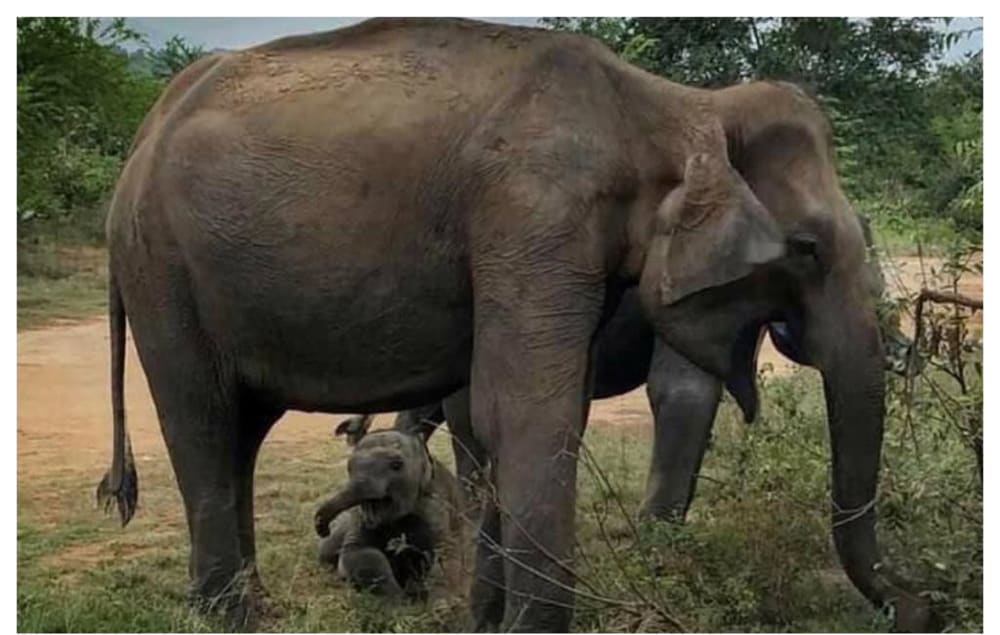
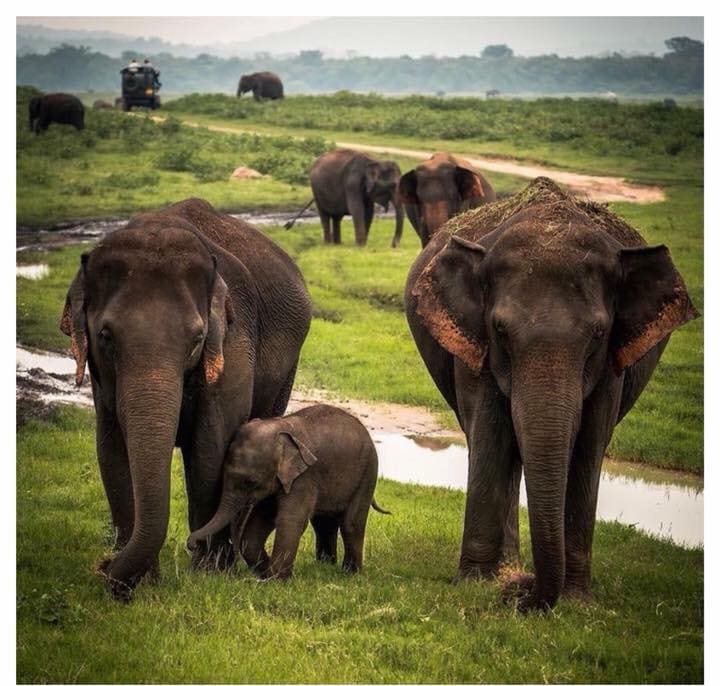
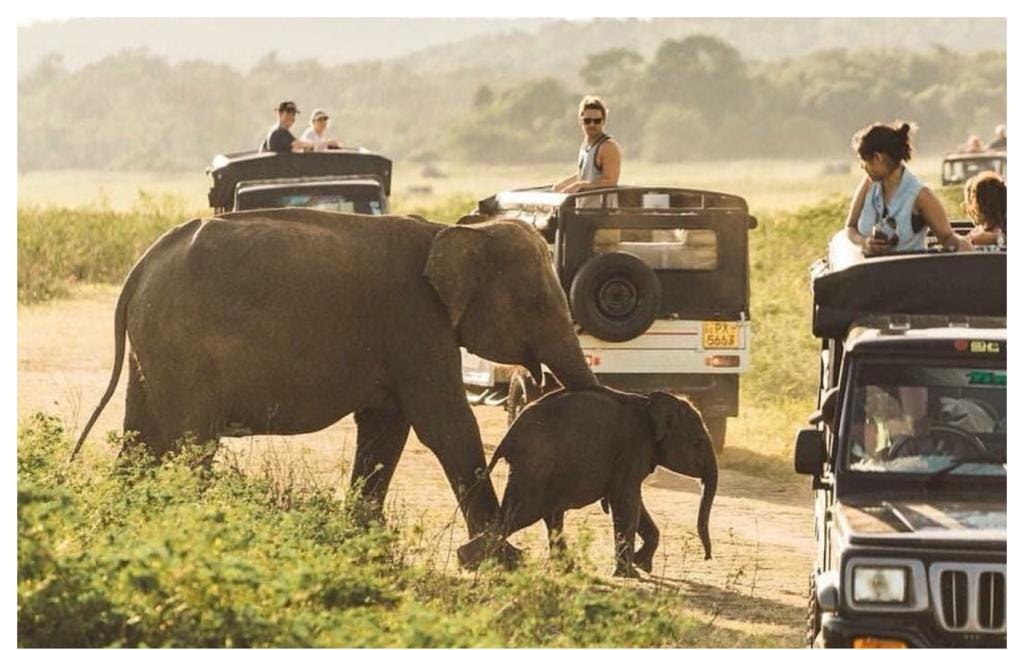
Very likely. Udawalawe has a herd of about 250 believed to be permanently resident inside a 308 km² park of open grassland and low scrub, so the animals are visible rather than hidden in forest. Our guests see elephants on more than 95% of morning drives, usually several separate groups, and often a mother with a calf.
How much are the Udawalawe park tickets?
The gate charges a foreign adult about Rs 9,080 plus roughly Rs 4,340 per jeep in vehicle and service charges, so one adult is about Rs 13,420 and two adults about Rs 22,500 before anyone has moved. Children aged 6–12 are about Rs 5,450 and under-6s enter free. All of it is already inside the price we quote you.
Is the price really all-inclusive?
Yes. The figure we quote covers the return transfer from your Mirissa hotel, the private 4WD jeep, the naturalist guide and the park entrance tickets for every passenger. Nothing is collected at the gate and nothing is added on the way home. The only thing not included is an optional tip for the Department of Wildlife Conservation tracker, if one is assigned to your jeep.
Which Mirissa hotels do you collect from?
All of them, and the neighbouring villages too — Mirissa itself, Weligama, Midigama, Ahangama, Kamburugamuwa and Matara. This stretch of coast is only about 15 km end to end, so the pickup time barely changes wherever you are staying. Tell us the property name when you book and we will confirm the exact time for it.
Is the drive suitable for young children?
Yes — this is one of the easier bases for a family. Under two hours each way is manageable, the elephants are visible in the open rather than glimpsed through scrub, and the morning trip has you back before lunch. Under-6s enter the park free. Bring ear defenders for very young children if they are noise-sensitive, as the jeep is open and the tracks are rough.
Can you add the Elephant Transit Home?
Yes. It is a few kilometres beyond the park entrance and the milk feedings run at 9:00 AM, 12:00 noon, 3:00 PM and 6:00 PM. The noon session pairs neatly with a morning drive that finishes at 9:30, and gets you home at about 2:00 PM instead. The 9:00 AM feeding clashes with the best part of the safari, so we do not recommend that combination.
What should we bring?
A light fleece or windproof layer for the 6:00 AM start, sunglasses, sun cream, insect repellent and a hat for later in the drive, plus binoculars and the longest lens you own. Most Mirissa guesthouses will leave out a breakfast box if you ask the night before. Leave drone equipment behind — drones are prohibited inside the national park.
The best wildlife week on the island
There is nowhere else in Sri Lanka where the largest animal that has ever lived and the largest animal on land are two hours apart. Between November and April you can stand on a boat deck watching a blue whale surface before breakfast, and be twenty feet from a wild elephant the same afternoon. Outside whale season the park is if anything better, because the dry months pull the herds in around the reservoir.
Book the morning drive if the safari is the thing — you will see more. Book the afternoon if you are pairing it with the boat. And if you have two mornings to spare, use them both and do neither in a rush.
Staying elsewhere on the coast? We run this trip from Galle, Tangalle, Bentota, Ella, Colombo and Shangri-La Hambantota too. For the full cost breakdown see the 2026 Udawalawe safari price guide.
🐘 Book your morning at Udawalawe
Send your hotel and dates. One fixed, all-inclusive price, a realistic pickup time, and we will work around your whale boat if you have one booked.