
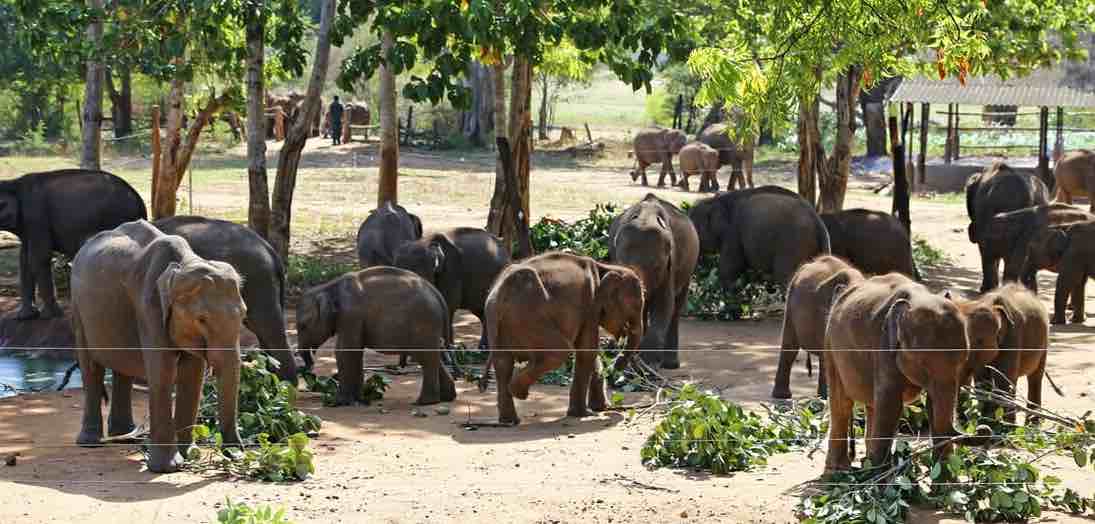
The Elephant Transit Home (ETH) at Udawalawe National Park is Sri Lanka's most ethical elephant rehabilitation facility — and one of the most heartwarming wildlife experiences in Asia. Established in 1995 by the Department of Wildlife Conservation, the ETH rescues orphaned and injured baby elephants, nurses them back to health, and releases them into the wild once they can fend for themselves. Over 100 elephants have been successfully rehabilitated and returned to Udawalawe National Park.
Unlike commercial elephant orphanages, the ETH operates as a genuine wildlife conservation project. There's no elephant riding, no bathing sessions, no circus tricks — just dedicated caregivers bottle-feeding milk to orphaned calves who will one day roam free in the 308 km² wilderness of Udawalawe. This guide covers everything you need to know: feeding times, tickets, how to visit, the ETH's history, ethical tourism considerations, how to combine it with a jeep safari, and 30 detailed FAQs.
🐘 Book Your All-Inclusive Safari Package
Combine your ETH visit with an unforgettable Udawalawe jeep safari! Our packages include hotel pickup, private 4WD jeep, park tickets, expert naturalist guide, and time at the Elephant Transit Home.
Book Safari from $50 →🏠 What Is the Elephant Transit Home?
The Udawalawe Elephant Transit Home (Sinhala: උඩවලව ඇත් අතුරු සෙවණ, Udawalawa Ath Athuru Sewana) is a wildlife protection facility within Udawalawe National Park in southern Sri Lanka. It was established in 1995 by the Sri Lanka Department of Wildlife Conservation under the 29th Amendment to the Fauna and Flora Protection Ordinance Part II.
The facility was created to address a growing crisis: up to three elephants per week are killed in Sri Lanka due to human-elephant conflict, often leaving behind helpless orphan calves. Without intervention, these calves would not survive. The ETH rescues them, provides veterinary care and bottle-feeding, and gradually prepares them for release back into their natural habitat.
Quick Facts: Elephant Transit Home
- Official Name: Udawalawe Elephant Transit Home (ETH)
- Sinhala Name: උඩවලව ඇත් අතුරු සෙවණ (Udawalawa Ath Athuru Sewana)
- Established: 1995
- Location: Near the entrance of Udawalawe National Park, Sabaragamuwa Province
- Coordinates: 6°28′00″N 80°53′00″E
- Governing Body: Department of Wildlife Conservation, Sri Lanka
- Mission: Rehabilitate orphaned/injured elephant calves and release into the wild
- Elephants Released: Over 100 since opening
- Current Capacity: 20–40 calves at any time
- Feeding Times: 9:00 AM, 12:00 PM, 3:00 PM, 6:00 PM
- Nearest City: Embilipitiya
- Distance from Colombo: 165 km (4–5 hours)
The key difference between the ETH and facilities like Pinnawala Elephant Orphanage is that ETH's sole purpose is rehabilitation and release. The elephants are kept within the boundaries of Udawalawe National Park to maintain familiarity with their natural habitat. Human contact is deliberately minimized to ensure the elephants can readapt to wild life. Once calves are old enough to fend for themselves — typically at age 4–5 years — they are released into the park where they join the resident herd of 250+ wild elephants.
📜 History of the Elephant Transit Home
The ETH has a remarkable conservation history spanning three decades. Here are the key milestones:
Udawalawe National Park Established
The 308 km² national park was gazetted on 30 June 1972 to protect wildlife displaced by the Udawalawe Reservoir construction on the Walawe River. The park quickly became a crucial elephant habitat.
Elephant Transit Home Established
The Department of Wildlife Conservation established the ETH under the 29th Amendment to the Fauna and Flora Protection Ordinance Part II. The facility was purpose-built within the national park to rehabilitate orphaned elephant calves from across Sri Lanka.
First Successful Releases
Nine rehabilitated calves were released into Udawalawe National Park in two batches — marking the first successful wild releases from the facility and proving the rehabilitation model works.
Third Release Batch
Another eight calves were released into the park once they were old enough to fend for themselves. The released elephants were observed integrating with the wild herd successfully.
Solar-Powered Milk Heating
Dilmah Conservation sponsored a solar water heater installation at the ETH, enabling sustainable heating of milk used to feed orphaned calves — reducing the facility's environmental footprint.
100+ Elephants Successfully Released
Today, over 100 orphaned elephants have been rehabilitated and released into Udawalawe National Park. The ETH is recognized as one of Asia's most successful elephant rehabilitation programs. Many released elephants have been observed breeding in the wild.
🐘 Book Your All-Inclusive Safari Package
See wild elephants in Udawalawe AND visit the baby elephants at the ETH — all in one unforgettable day. Hotel pickup included from Colombo, Ella, Mirissa, and Galle.
Book Safari from $50 →🍼 Feeding Times & Schedule
The most popular activity at the Elephant Transit Home is watching the daily milk feedings. Orphaned calves line up and are bottle-fed milk by caregivers, with visitors watching from behind a rope barrier just metres away. There are four daily feeding sessions:
🌅 Morning
Best combined with a 6 AM morning safari. Largest number of visitors. Arrive 15 min early for best viewing position.
☀️ Midday
Quieter than morning. Perfect after a morning safari — your guide can drop you here before returning you to your hotel.
🌤️ Afternoon
Ideal before an afternoon safari (1:30–6:00 PM). Moderate crowds. Good for photography with afternoon light.
🌆 Evening
Quietest session — fewest visitors. Beautiful golden hour light. Only accessible if staying near the park overnight.
Best Strategy: Morning Safari + Noon Feeding
Book a morning jeep safari (6:00–10:00 AM) with Udawalawa.com, see wild elephants in the park, then visit the ETH for the 12:00 PM feeding. This avoids the busiest 9 AM session and gives you the full wildlife experience — wild elephants first, then rescued baby elephants. Your guide will coordinate the timing.
🎫 Tickets, Entry Fees & Costs
The Elephant Transit Home has a separate entrance fee from Udawalawe National Park. You do not need a park ticket to visit the ETH alone — it is located just outside the main park gate.
| Category | Fee (USD) | Fee (LKR) | Notes |
|---|---|---|---|
| Foreign Adult | ~$5 | ~LKR 1,500 | Per person |
| Foreign Child (6–12) | ~$3 | ~LKR 900 | Under 6 free |
| SAARC Adult | ~$3 | ~LKR 1,000 | India, Nepal, Bangladesh, etc. |
| Local Adult | — | LKR 50 | Sri Lankan citizens |
| Camera Permit | Included | Included | No extra charge for personal cameras |
| ETH + Park Safari (Foreign Adult) | ~$20+ | ~LKR 6,000+ | Separate tickets |
Save Money: All-Inclusive Package
With Udawalawa.com's all-inclusive safari package (from $50/person), you get the national park safari with private jeep, guide, all park fees, plus time at the ETH — all coordinated for you. It's easier and often cheaper than arranging park tickets, ETH tickets, jeep hire, and transport separately.
🐘 Book Your All-Inclusive Safari Package
Skip the hassle of separate tickets! Our packages include hotel pickup, private 4WD jeep, park entrance, naturalist guide, AND Elephant Transit Home visit — all from $50 per person.
Book Safari from $50 →🚗 How to Visit the Elephant Transit Home
The ETH is located just outside the main entrance of Udawalawe National Park, near the town of Udawalawe. It's easily accessible from all major tourist destinations in Sri Lanka.
| From | Distance | Drive Time | Best Combination |
|---|---|---|---|
| Colombo | 165 km | 4–5 hours | Day trip with morning safari + ETH |
| Ella | 75 km | 2–2.5 hours | Most popular day trip combination |
| Mirissa | 100 km | 2.5 hours | Safari + ETH en route to Ella |
| Galle | 130 km | 3 hours | Day trip or stopover |
| Tangalle | 60 km | 1.5 hours | Closest beach town — easy day trip |
| Nuwara Eliya | 130 km | 3.5 hours | Combine with hill country tour |
| Udawalawe National Park Gate | 500 m | 2 minutes | Walk from park entrance! |
🚐 Easiest Way: Udawalawa.com Hotel Pickup
Udawalawa.com offers free hotel pickup from Colombo, Ella, Mirissa, Galle, Tangalle, Nuwara Eliya, and anywhere in between. Your driver collects you, takes you to the park for your jeep safari, then coordinates your ETH visit around feeding times. Everything is arranged — you just enjoy the experience. Book your package →
📋 Sample Day: Safari + ETH Visit
Here's the ideal itinerary for combining an Udawalawe jeep safari with an Elephant Transit Home visit — our most popular day trip:
Hotel Pickup
Your Udawalawa.com driver collects you from your hotel (Ella, Mirissa, etc.) in a comfortable air-conditioned vehicle.
Arrive at Park Gate
Transfer to your private 4WD safari jeep. Meet your naturalist guide. Quick briefing on the day's plan.
Morning Safari Begins
Enter the park. See wild elephant herds, water buffalo, deer, crocodiles, and 184 bird species. First elephant sighting usually within 15 minutes.
Exit the Park
After 4 hours in the park, exit through the main gate. Quick refreshment break at a local shop if desired.
Arrive at Elephant Transit Home
Walk from the park entrance to the ETH (500 metres). Arrive early to get a good viewing position at the rope barrier before the noon feeding.
🍼 Watch the Noon Feeding
Watch orphaned baby elephants line up for their milk bottles. Caregivers feed them from behind the barrier. An incredibly emotional experience — 20–30 minutes that you'll never forget.
Explore & Lunch
Browse the ETH information center to learn about elephant conservation. Then enjoy lunch at a nearby local restaurant before your driver returns you to your hotel.
Return to Hotel
Your driver returns you to your hotel by mid-afternoon — the perfect day trip. Alternatively, continue to your next destination (e.g., Ella from Mirissa, or vice versa).
🐘 Book Your All-Inclusive Safari Package
The perfect day: wild elephants in the morning, baby elephants at noon. All-inclusive packages from $50 with hotel pickup from anywhere in Sri Lanka.
Book Safari + ETH Visit →⚖️ ETH vs Pinnawala Elephant Orphanage: What's the Difference?
Visitors often confuse the Elephant Transit Home with the more famous Pinnawala Elephant Orphanage near Kandy. They are fundamentally different facilities with very different missions:
| Feature | Elephant Transit Home (ETH) | Pinnawala Orphanage |
|---|---|---|
| Location | Udawalawe National Park | Near Kandy (Rambukkana) |
| Established | 1995 | 1975 |
| Primary Mission | ✅ Rehabilitate & release to wild | ❌ Permanent captivity |
| Elephants Released? | ✅ Over 100 released | ❌ None released |
| Elephant Riding? | ✅ No — strictly prohibited | ❌ Available (controversial) |
| Bathing Shows? | ✅ No — natural behavior only | ❌ Daily bathing shows |
| Human Contact | Minimized for wild release | Encouraged for tourists |
| Habitat | Within national park (natural) | Urban/commercial setting |
| Safari Nearby? | ✅ Udawalawe NP (500m away) | ❌ No safari nearby |
| Ethical Rating | ⭐⭐⭐⭐⭐ (Highly ethical) | ⭐⭐ (Controversial) |
| Governed By | Dept. of Wildlife Conservation | National Zoological Dept. |
| Entry Fee (Foreign) | ~$5 USD | ~$15–20 USD |
Our Recommendation: Choose the ETH
If you care about ethical elephant tourism, the Elephant Transit Home is the clear choice. You'll see baby elephants being fed in a genuine conservation setting — and you can combine it with a jeep safari to see 250+ wild elephants in their natural habitat. It's the complete elephant experience, done the right way.
🌿 Why the ETH Is an Ethical Choice
Ethical wildlife tourism is increasingly important to travelers. Here's why the Elephant Transit Home is considered one of the most responsible elephant facilities in Asia:
Release-Focused Mission
Every elephant is being prepared for wild release — not kept for entertainment. Over 100 have been successfully returned to Udawalawe National Park.
No Riding or Bathing
There is no elephant riding, bathing sessions, or physical interaction. Visitors observe from behind a barrier, maintaining natural elephant behavior.
Natural Habitat
The ETH is located within Udawalawe National Park itself. Elephants live in their natural environment, not a zoo or urban setting. This aids successful wild reintegration.
Government-Run Conservation
Operated by the Department of Wildlife Conservation — a government body, not a commercial enterprise. Revenue supports conservation, not profit.
Minimal Human Contact
Caregivers limit human interaction to feeding and medical care. This ensures calves don't become habituated to humans and can successfully re-wild.
Sustainable Practices
Solar-powered milk heating (donated by Dilmah Conservation) reduces the facility's environmental footprint. Feed and care practices follow veterinary science.
📜 Visitor Rules & Guidelines
To protect the elephants and ensure a safe, enjoyable visit, follow these rules at the Elephant Transit Home:
🐘 Book Your All-Inclusive Safari Package
Wild elephants + baby elephants + expert guide + hotel pickup = the perfect day. All-inclusive jeep safari packages from just $50 per person.
Book Safari + ETH Visit →🎒 What to Bring to the ETH
📷 Photography Gear
A zoom lens (70–200mm) is ideal for close-up shots of the calves from behind the barrier. A wide-angle lens captures the full feeding scene. Smartphone cameras work well for casual photos. Remember: no flash.
☀️ Sun Protection
The feeding area is outdoors with limited shade. Bring SPF 50+ sunscreen, sunglasses, and a hat. UV index in Sri Lanka is 11–12 year-round.
💧 Water & Snacks
Bring 1L+ of water. There are small shops near the entrance selling water and basic snacks, but selection is limited. Our safari packages include bottled water.
👟 Comfortable Footwear
Closed-toe shoes or sandals with straps. The path to the feeding area is unpaved and can be dusty or muddy after rain. Avoid flip- flops.
🦟 Insect Repellent
Mosquitoes can be present, especially during the 3 PM and 6 PM feeding sessions. Apply DEET-based repellent before arriving.
🔬 Elephant Conservation at Udawalawe
The Elephant Transit Home exists because of a severe and ongoing crisis. Sri Lanka's Sri Lankan elephant (Elephas maximus maximus) is classified as Endangered by the IUCN. The total wild population is estimated at 5,800–6,000 individuals, down from an estimated 12,000–14,000 in the 19th century.
The primary threat is human-elephant conflict. As farmland expands into elephant habitat, confrontations are increasingly deadly. According to Mongabay and the Department of Wildlife Conservation, up to three elephants per week are killed in Sri Lanka — often by illegal electric fences, muzzleloader guns, or poison. This leaves behind orphaned calves too young to survive alone.
The ETH addresses this by:
- Rescuing orphaned calves from across Sri Lanka
- Providing 24/7 veterinary care and bottle-feeding
- Keeping calves within their natural park habitat
- Minimizing human contact to preserve wild instincts
- Releasing elephants once they reach 4–5 years old
- Monitoring released elephants for post-release survival
Udawalawe National Park itself is home to an estimated 250–500 wild elephants, many of which are former ETH residents. Released elephants have been observed successfully joining wild herds and even breeding — the ultimate measure of rehabilitation success. Your entrance fee to the ETH directly supports this conservation work.
🐘 Book Your All-Inclusive Safari Package
Support elephant conservation AND have an incredible experience. Every booking helps protect Sri Lanka's endangered elephants. All-inclusive packages from $50.
Book Safari from $50 →❓ 30 Frequently Asked Questions About the Elephant Transit Home
🏠 About the Elephant Transit Home
The Elephant Transit Home (ETH) is a government-run rehabilitation facility within Udawalawe National Park, established in 1995 by the Department of Wildlife Conservation of Sri Lanka. Its primary mission is to rescue orphaned and injured elephant calves, nurse them back to health through bottle-feeding and veterinary care, and release them back into the wild. Over 100 elephants have been successfully rehabilitated and returned to the park's 250+ wild herd.
The ETH was established in 1995 under the 29th Amendment to the Fauna and Flora Protection Ordinance Part II. The facility was created within Udawalawe National Park (which was itself established in 1972) specifically to address the growing number of orphaned elephant calves resulting from human-elephant conflict across Sri Lanka.
The ETH was created because up to three elephants per week are killed in Sri Lanka due to human-elephant conflict — from illegal electric fences, muzzleloader guns, and habitat loss. This leaves behind orphan calves who cannot survive without their mothers. The ETH provides a safe environment for these calves to grow until they can be released into the wild herd at Udawalawe National Park.
Over 100 orphaned elephants have been successfully rehabilitated and released into Udawalawe National Park since the ETH opened in 1995. The first batch of nine calves was released in two groups in 1998 and 2000, followed by eight more in 2002. Releases have continued regularly since then. Many released elephants have been observed successfully integrating with wild herds and even breeding.
The ETH typically houses 20–40 orphaned calves at any given time, ranging from newborns to juveniles aged 4–5 years approaching release age. The exact number varies based on rescue intake and release schedules. During feeding sessions, you'll see calves of various ages all lined up for their milk bottles.
The ETH is operated by the Department of Wildlife Conservation of Sri Lanka — a government body, not a private commercial enterprise. This ensures that the facility's mission remains focused on conservation and rehabilitation rather than tourism profits. Dilmah Conservation has provided support including solar-powered milk heating equipment.
🍼 Feeding Times & Visiting
There are four daily feeding sessions: approximately 9:00 AM, 12:00 PM (noon), 3:00 PM, and 6:00 PM. During these sessions, orphaned calves are bottle-fed milk by caregivers while visitors watch from behind a rope barrier. Each feeding lasts approximately 20–30 minutes. The 9:00 AM session is the most popular; the 12:00 PM noon session is best combined with a morning safari.
The 12:00 PM noon feeding is our top recommendation — it's less crowded than the 9 AM session and pairs perfectly with a morning jeep safari (6:00– 10:00 AM). The 3:00 PM feeding works well before an afternoon safari. The 6:00 PM feeding is the quietest but only practical if you're staying overnight near the park.
Plan for 30–60 minutes total. The feeding session itself lasts 20–30 minutes, plus time to walk to and from the viewing area, browse the information center, and take photos. There's no need to spend hours — the main attraction is the feeding, and it's relatively quick but incredibly memorable.
The ETH is open daily from approximately 8:30 AM to 5:30 PM (the last public feeding is at 6:00 PM but gates close before that for new entries). It is open every day including weekends and public holidays. Arrive at least 15 minutes before a feeding time to get a good viewing position.
Foreign adults pay approximately $5 USD (~LKR 1,500), foreign children (6–12) approximately $3 USD (~LKR 900), and Sri Lankan citizens pay LKR 50. Camera usage is included in the ticket — no extra permit needed. The ETH has a separate entrance from Udawalawe National Park, so you do NOT need a park ticket to visit the ETH alone.
No advance booking is needed for the ETH itself — you simply pay at the gate on arrival. However, if you're combining it with an Udawalawe jeep safari, we strongly recommend booking the safari in advance with Udawalawa.com. Your guide will arrange the timing to perfectly sync with an ETH feeding session.
🐘 Book Your All-Inclusive Safari Package
Don't miss the baby elephants! Our packages include time at the Elephant Transit Home, plus a full jeep safari with 95%+ wild elephant sighting rate. From just $50 per person.
Book Safari + ETH Visit →🚗 Getting There & Logistics
The ETH is located just outside the main entrance gate of Udawalawe National Park, approximately 500 metres from the park gate. It's in the Sabaragamuwa Province of Sri Lanka, near the town of Embilipitiya. GPS coordinates: 6°28′00″N 80°53′00″E. If you're doing a safari, your jeep drops you at the park gate and the ETH is a short walk from there.
Yes, you can visit the ETH independently without entering Udawalawe National Park. It has its own separate entrance and ticket. However, we strongly recommend combining it with a jeep safari — you'll see 250+ wild elephants in the park AND baby elephants at the ETH. The two experiences complement each other perfectly.
Ella is just 75 km (2–2.5 hours) from the ETH via a scenic mountain road through Wellawaya. This is one of the most popular day trips from Ella. With Udawalawa.com, your driver picks you up at 3:30 AM, you do a morning safari (6–10 AM), visit the ETH for the noon feeding, and return to Ella by early afternoon.
Yes, Mirissa is 100 km (2.5 hours) and Tangalle is just 60 km (1.5 hours) from the ETH. Many south coast visitors combine a morning safari with an ETH visit as a day trip — or as a transit stop when traveling between the coast and hill country. Udawalawa.com handles all logistics with doorstep pickup.
Yes, there is free parking available near the ETH entrance. If you're arriving as part of an Udawalawa.com safari package, your driver will handle parking — you simply walk from the park gate area to the ETH. Tuk-tuks from Udawalawe town are also available for independent visitors.
🐘 The Elephants & Conservation
Orphaned calves are rescued from across Sri Lanka and brought to the ETH. They receive 24/7 veterinary care and are bottle-fed milk heated using solar-powered equipment. As they grow, human contact is gradually reduced to preserve their wild instincts. Once they reach 4–5 years old and can feed independently, they are released into Udawalawe National Park. Post-release monitoring tracks their integration with the wild herd.
Yes, the ETH is widely considered one of Asia's most ethical elephant facilities. Key reasons: its sole mission is rehabilitation and wild release (not entertainment), elephants live within their natural national park habitat, there is no riding or bathing, human contact is minimized, it's operated by the government (not commercially), and over 100 elephants have been successfully returned to the wild. Your entrance fee directly supports conservation.
The fundamental difference is mission: the ETH rehabilitates and releases elephants back into the wild, while Pinnawala keeps elephants in permanent captivity. Pinnawala offers elephant riding and bathing shows (controversial); the ETH prohibits all physical contact. The ETH is within a national park; Pinnawala is in an urban setting. The ETH is run by the Wildlife Department; Pinnawala by the National Zoological Department. For ethical tourism, the ETH is the clear choice.
The ETH does not currently offer a formal adoption or sponsorship program for individual elephants. The best way to support their work is by visiting (your entrance fee funds conservation), spreading awareness, and booking responsible safari tours that include ETH visits. Some international conservation organizations also support elephant conservation in Sri Lanka — check with the Department of Wildlife Conservation for current initiatives.
Yes, the Department of Wildlife Conservation monitors released elephants to assess their integration with the wild herd. Some elephants receive identification markings or are tracked by researchers. Studies have confirmed that many released elephants successfully join wild herds, establish territories, and breed — the ultimate measure of rehabilitation success. Safari guides in the park can sometimes identify former ETH residents among the wild herds.
📸 Experience & Practical Tips
Absolutely — the ETH is one of Sri Lanka's best family attractions. Children love watching baby elephants drink from bottles. It's educational, safe, and short enough (30 minutes) to hold young attention spans. Children under 6 enter free. Just ensure children stay behind the barrier and keep noise levels down. It's a wonderful way to teach kids about wildlife conservation.
Use a zoom lens (70–200mm) to get close-up images of the calves from behind the rope barrier. Set continuous autofocus (AF-C) to track moving calves. Use ISO 400–800 and shutter speed 1/500s or faster to freeze movement. Shoot at the 9 AM or 3 PM feedings for softer, more directional light. No flash allowed — increase ISO instead. Smartphone cameras also capture excellent video of the feedings.
Yes, the ETH has an information center with displays about elephant biology, the facility's conservation work, the human-elephant conflict crisis, and the rehabilitation process. It's a worthwhile 10–15 minute visit before or after the feeding session to understand the context of what you're seeing.
Basic toilet facilities are available near the entrance. There are a few small shops selling water, snacks, and souvenirs near the ETH and park gate area. For a proper meal, restaurants in Udawalawe town (5 minutes away) offer local rice and curry meals at reasonable prices. Udawalawa.com full-day safari packages include lunch at a local restaurant.
🚙 Combining ETH with Udawalawa.com Safari
Absolutely — this is our most popular combination and the best way to experience Udawalawe. With Udawalawa.com, you do a morning jeep safari (6:00–10:00 AM) to see 250+ wild elephants, exit the park, and walk 500 metres to the ETH for the 12:00 PM feeding to see baby elephants being bottle-fed. Your naturalist guide coordinates the timing perfectly. All-inclusive packages start from $50 per person. Book now →
Our all-inclusive safari packages include hotel pickup, private 4WD jeep, naturalist guide, all safari park entrance fees, and time for an ETH visit. The ETH entrance fee (approximately $5) may be paid separately at the ETH gate. Your guide will ensure you arrive before a feeding session. Simply request the ETH add-on when booking via WhatsApp (+94 77 083 3772) or our website.
Yes, Ella-to-Udawalawe is one of our most popular routes. Your driver picks you up at 3:30 AM from your Ella hotel, arrives at the park by 5:45 AM, you do a morning safari (6:00–10:00 AM), visit the ETH for the noon feeding, then return to Ella by early afternoon — or continue to your next destination (Mirissa, Tangalle, etc.). All transport is included in the package price. Check availability →
For families, we recommend the morning half-day safari (6:00–10:00 AM) followed by the 12:00 PM ETH feeding. Children love the baby elephants being bottle-fed — it's the highlight for many families. The half-day safari keeps the total trip to about 7–8 hours (including hotel pickup), which is manageable for young children. Our private jeeps accommodate families of up to 6 comfortably. Book family safari →
Yes, this is our ultimate wildlife package. Day 1: Udawalawe morning safari + ETH noon feeding, then drive to Yala area (2.5 hours) for overnight stay. Day 2: Yala morning safari for leopard tracking. Udawalawa.com handles all transport, accommodation, and both safari bookings seamlessly. See our Yala Leopard Guide for details. Enquire about multi-park packages →
🐘 Ready to Meet the Baby Elephants?
Book your all-inclusive Udawalawe safari + Elephant Transit Home visit today. Private jeep, expert guide, hotel pickup, and 95%+ wild elephant sighting rate — all from just $50 per person.
Book Safari + ETH Visit Now →