
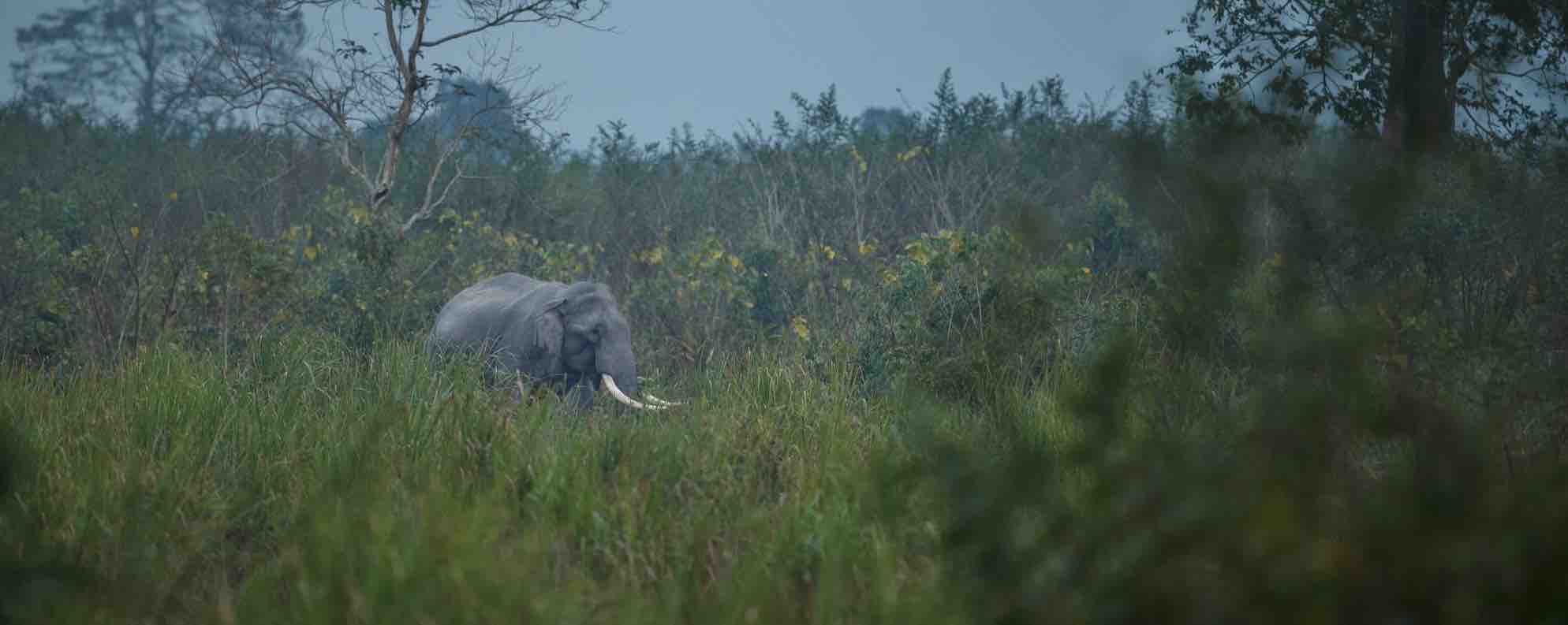
Udawalawe National Park is one of the best places on Earth to see wild Asian elephants. With an estimated 250-500 Sri Lankan elephants (Elephas maximus maximus) roaming freely across 308 km² of savanna, scrubland, and reservoir shoreline, sighting rates exceed 95% on any given safari. Add 184 bird species — including 33 Sri Lankan endemics — and you have one of Asia's greatest wildlife experiences.
This comprehensive guide shares expert tracking techniques for both elephants and birds, tells you exactly what to wear and bring, covers optimal timing, and provides 30 detailed FAQs. Whether you're photographing a herd of 50 elephants crossing the reservoir or spotting a Sri Lanka grey hornbill, this page is your definitive resource.
🐘 Book Your All-Inclusive Safari Package
Skip the hassle! Our packages include hotel pickup, private 4WD jeep, park tickets, and expert naturalist guide.
Book Safari from $50 →🐘 The Sri Lankan Elephant: A Gentle Giant
The Sri Lankan elephant (Elephas maximus maximus) is the largest of the three recognized Asian elephant subspecies and is endemic to Sri Lanka. Listed as Endangered on the IUCN Red List, the island's wild population is estimated at 5,879 individuals (2011 census). Udawalawe protects one of the largest and most accessible populations.
Key Facts: Sri Lankan Elephant
- Scientific Name: Elephas maximus maximus
- Conservation Status: Endangered (IUCN Red List)
- Population in Sri Lanka: ~5,879 wild individuals
- Height: Males 2.5-3.5 m (8-11.5 ft) at shoulder
- Weight: Males up to 5,000 kg (11,000 lb)
- Lifespan: 55-70 years in the wild
- Social Structure: Matriarchal herds of 8-12 females with calves; bulls solitary or in bachelor groups
- Unique Trait: Only ~7% of males have tusks (compared to ~50% in Indian elephants)
- Daily Food: 150-200 kg of vegetation per day
- Gestation Period: 22 months — the longest of any land animal
Udawalawe was specifically gazetted as a national park in 1972 to protect elephant habitat that was being flooded by the construction of the Udawalawe Reservoir on the Walawe River. This historical connection means the park was literally built around elephants, and the reservoir continues to draw massive herds to its receding shoreline during dry season.
🎯 Elephant Behavior to Watch For
Elephants are highly social and expressive. Watch for trunk greeting (intertwining trunks to say hello), dust bathing (spraying dirt on their backs for sun protection), mud wallowing at water holes, and ear flapping (to cool down). Mothers are fiercely protective of calves — keep distance from family groups with young babies. A raised trunk with ears spread wide is a warning sign.
🗺️ Key Elephant & Birding Habitats
Udawalawe's diverse landscape creates distinct habitats, each attracting different species. Understanding these zones helps you plan exactly where to go for specific sightings.
The Udawalawe Reservoir is the park's centerpiece. As water recedes during dry season, lush grasslands emerge along the shoreline, attracting massive elephant herds of 50-100+ individuals. This is the most reliable spot for large herd sightings. Birds like the painted stork, spot-billed pelican, and white-bellied sea eagle also frequent the reservoir edge.
Extensive grasslands provide unobstructed views of grazing elephants, often with calves. This habitat supports Sri Lanka junglefowl (the national bird), peacocks, and raptors including the changeable hawk-eagle and crested serpent eagle. The flat terrain provides excellent opportunities for photography with clean backgrounds.
Scrub forest and woodland edges are prime territory for endemic bird species. Look for the Sri Lanka grey hornbill, brown-capped babbler, and Sri Lanka woodshrike. Bull elephants often browse along the forest edge at dusk. Leopards — rare but present — also patrol these transitional zones.
🐘 Book Your All-Inclusive Safari Package
Skip the hassle! Our packages include hotel pickup, private 4WD jeep, park tickets, and expert naturalist guide.
Book Safari from $50 →⏰ Best Times for Elephant & Bird Sightings
Daily Activity Patterns
Elephants are most active during the cooler hours of morning and late afternoon. Birds follow a similar pattern, with dawn being the prime birding window. Plan your safari around these activity peaks.
| Time | Elephant Activity | Bird Activity | Best For |
|---|---|---|---|
| 6:00-8:00 AM | 🟢 Very High | Feeding, bathing. Peak birdsong & activity | |
| 8:00-10:00 AM | 🟢 High | Moving to water. Raptors begin soaring | |
| 10:00 AM-2:00 PM | 🟡 Moderate | Elephant shade-seeking, birds quiet | |
| 2:00-4:00 PM | 🟡 Moderate | Herds start moving, waterbirds active | |
| 4:00-6:00 PM | 🟢 Very High | Golden hour, reservoir gatherings, roost flights |
Seasonal Patterns
| Season | Months | Elephants | Birds | Notes |
|---|---|---|---|---|
| Peak Dry | May-Sept | Massive herds at reservoir, best visibility | ||
| Inter-Monsoon | Oct-Nov | Migratory birds arrive, elephants disperse | ||
| Wet Season | Dec-Feb | Lush, migratory birds peak, scattered herds | ||
| Early Dry | Mar-Apr | Good balance of both, comfortable weather |
Pro Tip: The "Golden Triangle" of Seasons
For the best combined elephant-and-bird experience, visit during October-November. The reservoir is still low enough for elephant congregations while migratory species from India, Siberia, and Southeast Asia have arrived. You get the best of both worlds.
🔍 Expert Elephant Tracking Techniques
👀 Read the Landscape
Elephants leave obvious signs: freshly broken branches, large dung piles (a fresh pile means elephants are nearby), deep footprints in mud, and stripped bark on thorn trees. Our guides read these like a map. Dung beetle activity on fresh dung means elephants passed within the hour.
💧 Follow the Water
Elephants drink 100-200 litres per day. They visit water in the morning and late afternoon. Position your jeep near a waterhole or reservoir edge and wait. Herds approach from predictable directions — experienced guides know the routes. The reward: entire families bathing, spraying, and playing.
👂 Listen for Communication
Elephants communicate through infrasonic rumbles below human hearing, but you can feel the vibration. Audible sounds include trumpeting (excitement or alarm), rumbling (social contact), and screaming (distress). When you hear rumbling, a herd approaches. A trumpet blast means stay back — it's a warning.
🐦 Use Elephants to Find Birds
Elephants and birds have a symbiotic relationship. Cattle egrets follow elephants to catch insects disturbed by their movement. Indian pond herons wait at elephant bathing spots. Drongo birds perch on elephant backs. Following elephants often leads you to excellent birding spots.
Safety: Respecting Elephants
Never approach closer than 25 metres. If an elephant raises its trunk, spreads its ears, or kicks dust, your jeep is too close. Bull elephants in musth (signaled by temporal gland secretions) are particularly dangerous. Always follow your guide's instructions. Turn off your engine near elephants to avoid startling them.
🐘 Book Your All-Inclusive Safari Package
Skip the hassle! Our packages include hotel pickup, private 4WD jeep, park tickets, and expert naturalist guide.
Book Safari from $50 →🦅 Top Birds to Spot at Udawalawe
Udawalawe has been designated an Important Bird Area (IBA) by BirdLife International. Of the 184 recorded species, 33 are endemic to Sri Lanka. Here are the must-see species:
Sri Lanka Grey Hornbill
Endemic. Forest edges, frequently seen in pairs
Sri Lanka Junglefowl
Endemic. National bird, males stunningly colorful
Painted Stork
Large flocks at reservoir, spectacular in flight
White-bellied Sea Eagle
Resident raptor, hunts fish over reservoir
Brown-capped Babbler
Endemic. Skulking in undergrowth, distinctive call
Indian Peafowl
Abundant, spectacular displays in breeding season
Brown Fish Owl
Near streams, best spotted at dusk
Malabar Pied Hornbill
Near threatened, large & distinctive casque
Changeable Hawk-Eagle
Powerful raptor, soars above canopy
Sri Lanka Woodshrike
Endemic. Small, active, often in mixed flocks
Birding Pro Tip
Tell your guide you're interested in birds — they'll slow the jeep near forest edges and marshlands. Dawn drives (6-8 AM) in the scrubland sections yield the most endemic species. Carry a copy of "A Field Guide to the Birds of Sri Lanka" by John Harrison for quick identification.
👕 What to Wear on Safari
What you wear can significantly impact your comfort, safety, and wildlife sighting success. Udawalawe's open terrain means you're exposed to sun, wind, and dust for 3-6 hours. Here's exactly what to wear:
- ✅ Lightweight long-sleeve shirt in khaki, olive, or beige
- ✅ Comfortable long trousers (convertible zip-off recommended)
- ✅ Light cotton or moisture-wicking base layer
- ✅ Light fleece or sweater for early morning (can be cool pre-dawn)
- ✅ Closed-toe shoes or boots (dust enters sandals)
- ✅ Cotton socks — avoid synthetic in heat
- ✅ Wide-brimmed hat or safari cap with neck flap
- ✅ Buff/scarf for dust protection
- ❌ Bright white — creates glare and startles animals
- ❌ Bright red or neon colors — unnatural, disturbing to wildlife
- ❌ Dark black — absorbs heat, you'll overheat by 10 AM
- ❌ Camouflage — may be confused with military, avoid in Sri Lanka
- ❌ Perfume or cologne — strong scents alert elephants
- ❌ Flip-flops or open sandals — dust, insects, and rough terrain
- ❌ Noisy fabrics — nylon jackets that "swish" scare birds
- ❌ Jewellery that glints — reflected light startles animals
🎒 Complete Safari Packing List
Being properly equipped ensures comfort and maximizes your wildlife encounters. Here's everything you need for an Udawalawe safari:
- 📷 Camera with telephoto lens (100-400mm ideal)
- 🔭 Binoculars (8x42 recommended — essential for birding)
- 🔋 Extra batteries (minimum 2 fully charged)
- 💾 Extra memory cards (64GB+ recommended)
- 🧹 Lens cleaning cloth and blower
- 🛋️ Bean bag for camera stabilization on jeep rail
- 📱 Smartphone for backup photos and GPS
- 🧴 Sunscreen SPF 50+ (reapply every 2 hours)
- 🕶️ UV-protection sunglasses (polarized reduce glare)
- 🧢 Wide-brimmed hat or cap
- 🦟 Insect repellent (DEET-based recommended)
- 💧 Reusable water bottle (1.5L minimum)
- 💊 Any personal medication
- 🧻 Tissues/wet wipes — no facilities in the park
- 🌧️ Compact rain jacket (during wet season)
- 📖 Sri Lanka bird field guide (Harrison recommended)
- 📝 Notebook and pen for species checklist
- 📋 Printed checklist of Udawalawe bird species
- 🗺️ Park map (available at entrance gate)
- 🎧 Bird call app on phone (for identification only — don't playback)
- 🍪 Dry snacks (energy bars, nuts — eat quietly)
- 💰 Cash for park entrance fees and tips
Packing Pro Tip
Keep everything in a soft, dust-proof bag — not a hard case, as jeeps have limited space. A small backpack that fits between your feet works perfectly. Our safari jeeps have overhead bars for bags but open sides mean dust enters freely. Wrap camera gear in a ziplock bag when not shooting.
🐘 Book Your All-Inclusive Safari Package
Skip the hassle! Our packages include hotel pickup, private 4WD jeep, park tickets, and expert naturalist guide.
Book Safari from $50 →🏠 Elephant Transit Home (ETH)
The Elephant Transit Home, located just outside the park's entrance, is a government-run rehabilitation center for orphaned baby elephants. Established in 1995 by the Department of Wildlife Conservation, it differs from the famous Pinnawala Elephant Orphanage by focusing on rehabilitation and release back into the wild rather than permanent captivity.
🍼 What to Expect
Feeding times (typically 9 AM, 12 PM, 3 PM, and 6 PM) are the best viewing opportunities when baby elephants gather for milk bottles. Calves range from newborns to about 5 years old. Once they're healthy and independent, they're released into Udawalawe National Park. Over 100 elephants have been successfully rehabilitated and released. A visit takes about 30 minutes and pairs perfectly with a morning or afternoon safari.
🦁 Other Wildlife at Udawalawe
Beyond elephants and birds, Udawalawe supports an impressive diversity of wildlife:
Wild Water Buffalo
Herds at the reservoir edge
Spotted Deer
Abundant throughout the park
Wild Boar
Common near water sources
Mugger Crocodile
In rivers and reservoir
Land Monitor Lizard
Large lizards basking on roads
Leopard (Rare)
Present but very elusive here
Golden Jackal
Seen at dawn and dusk
Toque Macaque
Endemic monkey species
🐘 Book Your All-Inclusive Safari Package
Skip the hassle! Our packages include hotel pickup, private 4WD jeep, park tickets, and expert naturalist guide.
Book Safari from $50 →❓ 30 FAQs About Elephant & Bird Tracking at Udawalawe
🐘 Elephant Basics
Udawalawe National Park is home to an estimated 250 to 500 wild Sri Lankan elephants (Elephas maximus maximus). The park was originally created in 1972 specifically to protect elephant habitat displaced by the construction of the Udawalawe Reservoir. Herds of 10-50 elephants are commonly seen, and sighting rates exceed 95% on any given safari.
Yes, with over 95% sighting rate, Udawalawe offers virtually guaranteed elephant encounters. Most visitors see multiple herds during a single half-day safari. During dry season (May-September), it's common to see 100+ individuals gathered at the reservoir. This consistency makes Udawalawe one of the best destinations in Asia for wild elephant viewing.
Early morning (6:00-9:00 AM) and late afternoon (3:00-6:00 PM) offer the best elephant viewing. During these cooler periods, elephants actively feed, bathe, and move between areas. Midday is quieter as elephants shelter in shade. For the best photography light, the golden hours of early morning and late afternoon are ideal.
The dry season from May to September is the peak period. As the Udawalawe Reservoir recedes, elephants congregate around remaining water, creating spectacular gatherings. However, Udawalawe is excellent year-round — elephants are resident, not migratory. The wet season (October-February) has fewer tourists and lusher scenery, though herds are more dispersed.
Wild elephants are powerful animals and should always be respected. In a safari jeep with an experienced driver maintaining safe distance (25+ metres), encounters are very safe. Warning signs include ear spreading, trunk raising, mock charges, and trumpeting. Bull elephants in musth (hormonal state) are unpredictable. Never leave the vehicle, and always follow your guide's instructions.
🦅 Bird Watching
Udawalawe has 184 recorded bird species, including 33 endemic species to Sri Lanka. The park is designated as an Important Bird Area (IBA) by BirdLife International. Species range from massive painted storks and white-bellied sea eagles to tiny flowerpeckers and sunbirds. Both resident and seasonal migratory species are present.
Key endemics include the Sri Lanka grey hornbill, Sri Lanka junglefowl (national bird), brown-capped babbler, Sri Lanka woodshrike, crimson-fronted barbet, and Sri Lanka green pigeon. The forest edges and scrubland sections of the park are the most productive for endemic species. An experienced guide can help locate these often-skulking species.
Dawn (6:00-8:00 AM) is the prime birding window when birds are most vocal and active. For migratory species — Indian pitta, blue-tailed bee-eater, and various warblers — visit between October and March. Resident species are available year-round. Waterbirds at the reservoir are most active in late afternoon. The wet season brings lusher vegetation and more insect activity, attracting feeding flocks.
Yes, binoculars are essential for bird watching. Compact 8x42 models offer the best balance of magnification and field of view. Without binoculars, you'll miss the detail that makes bird watching rewarding — plumage patterns, eye rings, bill shapes. Many bird sightings occur at 30-100 metres. A spotting scope is useful but impractical in a moving jeep.
Absolutely. Udawalawe supports an impressive array of raptors including the white-bellied sea eagle, changeable hawk-eagle, crested serpent eagle, grey-headed fish eagle, brahminy kite, and black-winged kite. Raptors are most visible mid-morning when thermals develop, allowing them to soar. The reservoir edge is the best location for fish eagles and brahminy kites.
🐘 Book Your All-Inclusive Safari Package
Skip the hassle! Our packages include hotel pickup, private 4WD jeep, park tickets, and expert naturalist guide.
Book Safari from $50 →👕 What to Wear & Bring
Wear neutral-colored, lightweight clothing — khaki, olive, beige, or brown tops and trousers. Long sleeves protect from sun and insects. A wide-brimmed hat is essential for sun protection in the open jeep. Wear closed-toe shoes. Avoid bright white, red, and neon colors as they startle wildlife. Dress in layers: mornings are cool (22°C) while midday reaches 32°C+.
Essential items: binoculars (8x42), camera with telephoto lens, sunscreen SPF 50+, insect repellent, hat, sunglasses, 1.5L water bottle, and light rain jacket. For bird watchers, add a field guide and notebook. Don't forget extra camera batteries and memory cards. Keep everything in a compact, dust-proof backpack. Our all-inclusive packages provide water and snacks.
Bring at least 1.5 litres of water per person — there are no shops inside the park. Dry snacks like energy bars, nuts, and biscuits are fine. Avoid strong-smelling food that may attract animals or disturb wildlife. Do not feed any animals. Our Udawalawa.com all-inclusive safari packages include bottled water, and full-day packages include a restaurant lunch break outside the park.
Absolutely essential. Safari jeeps have a roof but open sides, and UV radiation in Sri Lanka is intense (UV index 11-12). Apply SPF 50+ sunscreen 30 minutes before departure and reapply every 2 hours. Especially protect your face, neck, ears, hands, and any exposed skin. Even overcast days have high UV penetration near the equator.
A telephoto zoom (100-400mm or 70-200mm) covers most situations. Elephants can be close (10-30m), so a super-telephoto isn't always necessary. Bring a wide-angle for environmental shots of herds against the reservoir. Use a bean bag on the jeep rail for stability. Set shutter speed to 1/500s minimum for sharp images. A smartphone works remarkably well for close encounters and video.
🚙 Safari Logistics
Udawalawe is open daily from 6:00 AM to 6:00 PM (last entry 6:30 PM for exit). The park operates year-round with no seasonal closures — unlike Yala which closes September-October. For the best experience, arrive at the gate by 5:45 AM to be among the first vehicles entering. Late afternoon safaris (3:00 PM entry) are also excellent for golden hour elephant encounters.
A half-day safari (3-4 hours) is sufficient to see elephants and enjoy the park. Full-day safaris (6-8 hours) with a lunch break outside the park are ideal for serious wildlife enthusiasts and bird watchers, covering both morning and afternoon activity peaks. For photography, full-day safaris provide the best light conditions and more patient observation time.
Udawalawe is approximately 165 km from Colombo (about 4-5 hours by road via the Southern Expressway). From the south coast: Mirissa ~2.5 hours, Galle ~3 hours, Tangalle ~1.5 hours, Ella ~2.5 hours. Udawalawa.com offers hotel pickup from all these locations with comfortable transport included in all-inclusive packages.
No, all visitors must enter with a licensed guide in an approved 4WD safari vehicle. This regulation protects wildlife and ensures visitor safety. Guides know elephant territories, bird habitats, and safe distances. The small guide fee dramatically improves your experience — experienced naturalist guides will spot animals you'd miss and share expert knowledge about behavior and ecology.
Facilities inside the park are very limited. There is a basic restroom near the park entrance. During full-day safaris, a lunch break outside the park provides access to restaurant facilities. Use the restroom before entering. Carry tissues and hand sanitizer. Our Udawalawa.com guides plan routes with comfort stops in mind.
🏢 Booking with Udawalawa.com
Yes! Udawalawa.com is one of the most trusted safari operators at Udawalawe National Park. Our all-inclusive packages start from $50 per person and include hotel pickup and drop-off from south coast hotels (Mirissa, Galle, Tangalle, Ella), private 4WD safari jeep (not shared), experienced English-speaking naturalist guide, all park entrance fees, and bottled water. We've been operating since 2015 with thousands of satisfied customers.
Absolutely! Let us know when booking that you're interested in bird watching and we'll assign a guide experienced in birding. Bird-focused safaris take a slower pace, focusing on forest edges and quieter tracks where endemic and migratory species are concentrated. We recommend a full-day safari for serious birders to cover all habitat types and maximize species count.
This is our most popular multi-park package! Visit Udawalawe for guaranteed elephant encounters, then continue to Yala National Park (2.5 hours east) for leopard tracking. We arrange accommodation between parks and handle all logistics. You'll see elephants, leopards, and an incredible diversity of wildlife across two of Sri Lanka's finest national parks in one seamless trip.
Our all-inclusive packages include: hotel pickup and drop-off (south coast and Colombo area), private 4WD safari jeep (not shared with strangers), experienced English-speaking naturalist guide, all park entrance fees and permits, bottled water, and optional breakfast/lunch. Full-day safaris include a restaurant lunch break. We also offer multi-day and Yala combination packages. No hidden fees — ever.
During peak season (May-September) and holidays (Christmas, Easter, Poya days), book at least 1-2 weeks in advance to guarantee your preferred date and the best guides. Off-peak season is more flexible, but advance booking is always recommended to secure a private jeep. Last-minute bookings may be possible — contact us via WhatsApp (+94 77 083 3772) for same-day availability.
🌍 Conservation & Ethics
Safari tourism directly funds park management, anti-poaching patrols, and habitat maintenance via entrance fees. Local communities employed in tourism (drivers, guides, hotels, restaurants) become stakeholders in wildlife protection rather than threats. The Department of Wildlife Conservation uses revenue for electric fencing that reduces human-elephant conflict — the leading cause of elephant deaths in Sri Lanka. Your safari directly supports elephant survival.
The Elephant Transit Home (ETH) is a government rehabilitation center for orphaned baby elephants, located at Udawalawe's entrance. Established in 1995, it mimics natural conditions and focuses on releasing elephants back into the wild — unlike Pinnawala which keeps elephants permanently. Over 100 elephants have been successfully rehabilitated. Feeding times (9 AM, 12 PM, 3 PM, 6 PM) offer the best viewing. A small entrance fee supports operations.
Key rules: maintain 25+ metre distance, never exit the vehicle, don't use flash photography, don't shout or make sudden noises, don't throw food, don't litter, stay on designated tracks, and don't pressure your driver to get closer. If an elephant approaches your vehicle, remain still and silent — they'll usually pass peacefully. Udawalawa.com guides are trained in ethical wildlife viewing practices.
The main threats include human-elephant conflict (crop raiding and retaliatory killing), habitat fragmentation from agriculture and development, illegal encroachment into the park, and vehicle-related injuries. The Department of Wildlife Conservation and NGOs work to mitigate these through electric fencing, translocation programmes, and community education. Responsible tourism supports these ongoing conservation efforts.
🐘 Ready to Track Elephants at Udawalawe?
Book your all-inclusive Udawalawe safari today. Private jeeps, expert guides, and virtually guaranteed elephant sightings await.
Book Elephant Safari Now →